
Manufacturing Tooling: A Practical Guide for OEMs
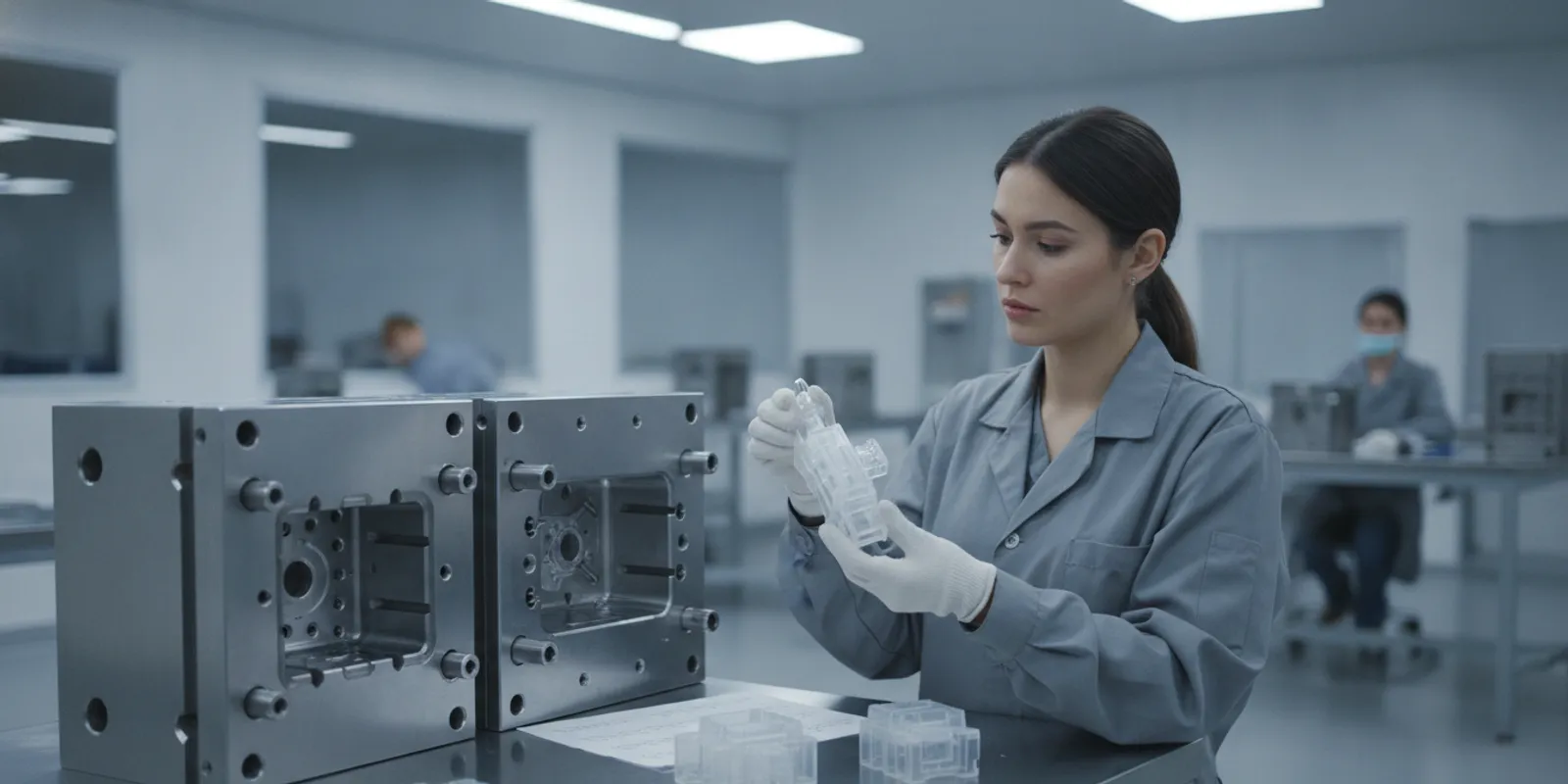
Manufacturing tooling affects how a part is made, inspected, and transitioned into production. For an OEM, a tool is not just a piece of equipment; it is part of a plan connecting product geometry, material, process, sample approval, production use, and tool control. Addressing those decisions early can make supplier proposals easier to compare and surface open questions before a program commits to a direction.
Call to discuss a tooling project
What does manufacturing tooling include?
Manufacturing tooling is equipment and supporting design used to shape, form, cut, position, or otherwise produce a component. Depending on the process, the term may refer to a mold, die, fixture, or another production aid. A tool is designed around the part and its intended process. It is not a generic accessory that can be selected independently of the design.
For a molded plastic part, a tool contains the cavity that forms the part. In metal stamping, a die works with a press to cut or form sheet material. Die casting uses a die to form a metal component. Machining may use fixtures to locate and hold a part in a repeatable position, while assembly and inspection can require their own aids. The right discussion therefore starts with the process and product requirements, not a request for a tool price in isolation.
Tooling is also connected to decisions that may not look like tooling decisions at first. A design revision may affect a mold surface or a fixture datum. A material change may require another review of how the part is produced or evaluated. A change in expected production use can affect what questions buyers ask about tool control and maintenance. The relationships vary by program, so teams should ask the supplier to explain them for the actual part rather than assume a standard answer.
EMS Technologies lists tooling among a wider set of manufacturing capabilities, including design and engineering, injection-molded plastics, metal injection molding, metal stamping, die casting, machining, PCB assemblies, cable assemblies and wire harnesses, magnetics and coil winding, turnkey assembly, packaging and fulfillment, and program management. Which capabilities fit depends on the project. A capability list is not a promise that every process or production step happens at one facility.
Why should tooling be discussed before design is frozen?
Tooling decisions can influence part geometry, material choices, inspection access, and production sequence. If a feature is difficult to make or measure, discovering that after a design is released can trigger revisions and another round of review. Bringing a manufacturing partner into the discussion earlier gives engineering and sourcing teams a chance to consider manufacturability alongside functional requirements.
Early review does not mean the supplier takes over design authority. The OEM remains responsible for product requirements, approvals, and decisions about acceptable changes. The purpose is to surface questions the design team can evaluate: Can the proposed process form the geometry? Are there features that may complicate tool construction or part release? Which dimensions matter to fit or function? How will the finished part be inspected?
For example, a plastic enclosure may need a particular wall profile, mounting feature, or surface appearance. The engineering team can explain what is essential and what might be adjusted. The supplier can then discuss implications for the process and tooling. The goal is not to change a design simply to make it easier to manufacture. It is to make trade-offs visible while the team still has a chance to discuss them.
Timing matters because each decision relies on earlier information. A supplier cannot meaningfully comment on a critical dimension if it is unclear which drawing revision governs. A buyer cannot compare alternative tool approaches if the expected material or part quantity is missing. And a sample review cannot settle an appearance question if the team has not said which surfaces are visible or what appearance is acceptable. Early alignment does not remove uncertainty, but it helps identify which uncertainty needs an answer before the next commitment.
How should you define the part before a tooling review?
A useful review begins with a clear definition of the part and its role. Provide the latest controlled drawing or model, intended material or acceptable material range, and relevant product requirements. Identify critical dimensions, interfaces, appearance requirements, and features tied to assembly or performance. If information is preliminary, label it as such rather than presenting it as released data.
- Part definition: Share the revision-controlled drawing and three-dimensional model if available. State which file governs if documents differ.
- Function: Explain what the component does and which interfaces or characteristics cannot change.
- Material: Specify the selected material or the properties it must meet. Clarify whether substitutions require approval.
- Appearance: Identify visible surfaces, finish expectations, and areas that will be hidden after assembly.
- Demand context: Share the expected program outlook and anticipated order pattern as planning inputs, not as a guaranteed volume commitment.
- Verification: List the dimensions and characteristics that need to be measured or otherwise confirmed during sample review.
- Interfaces: Include the mating components, connector locations, mounting points, or assembly constraints needed to understand how the part fits into the product.
- Revision status: Note open engineering changes and distinguish the current review baseline from concepts that are still being considered.
These details help a supplier distinguish a firm requirement from a preference. They also help the buyer avoid comparing proposals based on different assumptions. A drawing alone may not explain how a feature functions or which dimensions matter. A short written note can clarify design intent without replacing controlled product documentation.
A simple input register can help a team prepare. For each input, record the document or value, its revision or date, whether it is confirmed or provisional, and who can answer questions. For instance, a team might list a released drawing, a material still under evaluation, and a forecast that is only an estimate. That distinction tells the supplier where to base its review and where to request a decision. It also gives the OEM a way to update the package without silently changing the basis of a proposal.
Which tooling questions should engineering ask?
Ask the supplier to explain how the proposed tool relates to the geometry, process, and production plan. Keep the discussion specific to the part instead of relying on broad statements that a tool is suitable. A useful response should make assumptions, dependencies, and open points visible.
- Which features of the part most affect the proposed tool design?
- What information is still needed to assess feasibility?
- Which design changes, if any, are suggested, and what requirement would each change affect?
- What information or approval is needed before the tool direction can be finalized?
- How will the supplier identify and resolve questions that emerge during tool design or sample review?
- What sample or test evidence is proposed before the part is approved for the next stage?
- How will changes to the drawing, material, or demand plan be reviewed after the tooling direction is agreed on?
- Which assumptions are included in the proposal, and what events could require the parties to revisit them?
Request explanations in terms that both engineering and sourcing can evaluate. For instance, “this feature needs review because it affects tool construction” is a starting point, but the team should ask what decision is needed and whether there are alternatives. Record the agreed assumption, responsible owner, and next review point. That record can prevent a preliminary suggestion from being mistaken for an approved design change.
It is useful to separate questions into three groups. First are blocking questions, such as a missing material specification that prevents the supplier from assessing the part. Second are decisions that can be made after a review, such as choosing between two acceptable design options. Third are items to monitor, such as a demand estimate that is expected to become clearer later. This categorization helps a meeting end with specific actions rather than a long undifferentiated list.
How do process and part type shape the tooling discussion?
The process determines what kind of tooling is relevant and which technical questions deserve attention. Do not assume that the same review checklist applies in full to every component. Start with the proposed manufacturing process, then discuss how its tooling will support the part and its expected production use.
| Process context | Tooling focus for the review | Useful evidence or clarification |
|---|---|---|
| Injection-molded plastics | Part geometry, material, visible surfaces, interfaces, and the relationship between the part and mold. | Ask how proposed samples will be evaluated against the identified product requirements. |
| Metal stamping | Material and thickness, formed features, critical dimensions, and how the proposed die relates to the design. | Clarify which sample characteristics must be inspected and what information will be reported. |
| Die casting or metal injection molding | Confirm which distinct process is under review, along with its part, material, and tool assumptions. | Ask the supplier to tie its recommendation to the selected process rather than transferring assumptions from another process. |
| Machining and production aids | How fixtures locate and hold the part, and how setup relates to datums, operations, and inspection. | Discuss how the proposed setup supports the required measurements and any downstream interfaces. |
Injection-molded plastics
For an injection-molded part, review geometry, material, visible surfaces, interfaces, and the supplier’s proposed approach to making and evaluating samples. Ask which features create design or tool questions and how the team will determine whether a sample meets requirements. Avoid treating a general machine range or equipment listing as a specification for your particular job. Capacity, process fit, and tool details must be discussed for the actual component.
Make appearance expectations concrete. If one face is visible to a user and another is hidden inside an assembly, identify both. Explain whether a surface is functional, cosmetic, or both. If a design permits alternatives, document which alternatives engineering can consider and who approves them. This lets the supplier focus its questions while keeping the OEM in control of product acceptance.
Metal stamping
For stamped parts, discuss the material and thickness, formed features, critical dimensions, and relationship between design and proposed die. Make clear which details affect fit or function. Ask how the supplier proposes to review samples and what inspection information will be available. A design conversation is more productive when the supplier explains the specific geometry or requirement that drives a tooling recommendation.
If a stamped component mates with another part, bring that interface into the discussion. A dimension can be nominally present in a drawing yet still need context about its purpose and inspection. Note whether the component is evaluated alone or as part of an assembly, and state which condition represents the product requirement.
Die casting and metal injection molding
Die casting and metal injection molding are different processes, with different part and tooling considerations. Identify which process is being evaluated and ask for the assumptions behind the recommendation. Do not carry a tonnage specification or tooling expectation from one process to another. The supplier should tie its explanation to the selected process, part, material, and program requirements.
When the process itself remains open, ask the supplier to compare the options against the requirements rather than naming a preferred option without explanation. Separate a process recommendation from a final approval: the OEM should understand what product attributes, design assumptions, or program needs support the recommendation and what still needs validation.
Machining and production aids
Machined components may require fixtures or other aids to position and hold the work consistently. Ask how the proposed setup relates to the part’s datums, inspection plan, and operations. If several processes contribute to a finished assembly, include the interfaces between components in the conversation. Tooling for one component can be satisfactory on its own while still leaving an unresolved fit or assembly question elsewhere in the product.
For a multi-operation component, ask which features are established at each stage and how the team will refer to them later. This is not a request for a generic process promise. It is a way to make sure the proposed fixture and inspection discussion is tied to the defined part and the intended sequence.
How should teams turn review comments into decisions?
Supplier feedback is most useful when each comment is tied to a feature, requirement, and decision. A vague note such as “consider changing this area” is hard to evaluate. Ask the supplier to identify the affected drawing feature, explain the manufacturing or inspection concern, and state what change or additional information would resolve it. Engineering can then assess the effect on function, assembly, appearance, and controlled documentation.
For each proposed change, capture four items: the existing requirement, the supplier’s observation, the options the team is considering, and the person authorized to decide. Also note whether a change is merely under discussion or has been approved and incorporated into a revision. This makes it easier to compare the supplier’s initial proposal with later updates and prevents a comment from becoming an undocumented instruction.
Consider a hypothetical enclosure with a mounting feature and a visible outer face. The supplier flags a detail near the mounting feature as a tooling question. The buyer should not immediately accept or reject a redesign. Engineering first confirms the mounting feature’s functional role and allowable variation; the supplier explains how the detail affects its proposed tooling; quality identifies how the feature will be checked; and the program lead records the decision and revision. If the team cannot decide in the meeting, assign an owner and date for the next review rather than treating the matter as resolved.
A short decision log can be enough. It might include the topic, current status, decision needed, owner, due point, affected document, and evidence required to close the item. The important point is not the format. It is that the supplier, buyer, engineering, and quality teams can tell which decisions are open and which have been approved.
What should you clarify about samples and approval?
Tool completion is not the same thing as product approval. Establish what the supplier will provide for review, which revision and material the samples represent, and what criteria the OEM will use to accept them. Details depend on the product and agreement, so do not assume a universal sample quantity, test method, or approval form.
Before samples are made, align on the characteristics that matter and who will evaluate them. Depending on the part, the review may consider dimensions, material, appearance, assembly fit, or other stated product requirements. Make sure measurement methods and any special evaluation expectations are understood by the parties involved. If a characteristic cannot be confirmed using the proposed method, resolve that gap before relying on the result.
A sample package is easier to assess when each sample can be connected to its production context. Ask which drawing revision and material it represents, whether it reflects a proposed tool or process change, and what inspection results will accompany it. If the supplier has identified a deviation or an open question, make sure it is disclosed and reviewed rather than allowing the sample to stand in for a full approval.
When sample findings lead to a design or tool change, document the issue, the proposed correction, and the revision affected. Then confirm which new samples or evidence are needed. Keeping this trail helps teams distinguish an accepted sample from one reviewed only for discussion. It also gives program leaders a clearer view of outstanding decisions before the next phase proceeds.
A practical review meeting can follow a simple sequence: confirm the sample identity and documents; review the agreed critical characteristics; discuss assembly or appearance observations; list any deviations; assign a disposition and owner for each issue; and record whether the next step is approval, additional evidence, or another review. The sequence is a working agenda, not a substitute for a customer-specific quality or contractual process.
How should tool ownership and control be addressed?
Do not leave ownership and control implicit. Ask the supplier to state how the project agreement addresses tool ownership, identification, storage, maintenance, access, and transfer if the relationship or production plan changes. The answer should be documented in the commercial and program records that govern the project. Exact terms are project-specific; no universal ownership arrangement should be assumed.
Clarify who can authorize modifications and how the tool will be identified in records. Ask what information will be available about its condition and what events could require maintenance or repair. If the tool is intended to support more than one product revision, define how changes will be assessed and approved. For a program with multiple production locations or suppliers, discuss practical requirements for moving or replicating tooling without assuming a transfer is automatic.
Ownership language alone may not answer operational questions. A buyer may also need to know who coordinates an inspection, who provides notice before a proposed change, how records identify the tool, and which party approves work that could affect the part. Ask the supplier to distinguish what is already covered by the proposed agreement from what still needs to be added or clarified.
These questions matter even when the initial production plan seems straightforward. Product revisions, demand changes, or sourcing decisions can alter a tool’s role over time. Written terms give the buyer and supplier a shared reference when those circumstances change. Keep the tool-control record aligned with the part revision and the responsibilities agreed for the program.
How do geography and handoffs affect a tooling plan?
When engineering, tooling, production, and customer support involve more than one location, ask who owns each handoff and what information travels with it. Confirm the locations and responsibilities that apply to your specific project. Do not infer factory locations from a company’s sales address or assume every step occurs in one building.
EMS Technologies describes Taiwan and China as its production geographies and U.S. customer support and sales. Its tooling information describes a particular path for smaller complex projects: development and test-series work in Taiwan followed by transfer of the tool to China for applicable production work. The page also describes larger tools being built and tested in China. This is a described option for particular project circumstances, not a routing rule for every program.
For any proposed multi-location route, ask where design review, tool work, sample evaluation, production, and shipment responsibilities sit. Confirm how revisions and approval records will be shared across handoffs. A clear sequence can help the buyer understand the plan, but it should be established for the project rather than inferred from a general capability description. Ask who is the point of contact for a question at each stage and who ensures that the current drawing and decision log follow the work.
When the product combines components from different processes, define where their interfaces are reviewed. For example, a mechanical component may need to fit an electronic assembly or cable. The project team should identify which drawings and revisions govern each part and who resolves conflicts between them. EMS Technologies lists cable assemblies and wire harnesses among its capabilities; whether that capability is relevant depends on the actual product and scope.
What belongs in a manufacturing tooling RFQ?
A focused request for quote gives suppliers enough information to respond to the same project definition. It does not need to answer every open engineering question. It should clearly mark what is known, what is provisional, and what the supplier is being asked to assess.
- Identify the program: Provide product and component names, responsible contacts, and current document revisions.
- Describe the part: Attach the controlled drawing and model, material information, key interfaces, and relevant finish or appearance expectations.
- State the process under review: Name the intended process if selected, or ask the supplier to explain which option it is evaluating and why.
- Explain production context: Share planning assumptions, demand outlook, and expected product changes where known. Label forecasts as estimates.
- Define sample expectations: List requirements that must be demonstrated and the information you expect to review.
- Raise commercial and control questions: Request clarity on tooling ownership, maintenance, modifications, and other terms your organization needs addressed.
- List open decisions: Identify unresolved design, material, validation, or location questions and ask the supplier to state what is needed to close them.
- State response format: Tell suppliers how to identify assumptions, exclusions, requested clarifications, and items that need an OEM decision.
Before sending the package, check that its attachments match the revision list. Remove superseded drawings from the quote package or clearly label them as background only. If a model and drawing conflict, state which governs while the team resolves the discrepancy. Identify any files that are preliminary, and name the person who can answer technical questions. These simple controls help suppliers respond to the same version of the request.
For a broader supplier-selection framework, see the guide on choosing an electronics contract manufacturer. If the project spans more than one product category, the page describing markets EMS Technologies serves can help readers understand the markets the company lists. A market listing should not be taken as evidence of any particular regulatory certification.
How can buyers compare tooling proposals?
Compare the substance of proposals, not just the headline number. Scope and assumptions may differ, so ask each supplier to explain what its response includes and what remains open. There is no published standard tooling price or universal lead time that can substitute for a project-specific proposal.
- Scope: Is the proposed work tied to the same drawing revision, material, process, and production context?
- Assumptions: Are unresolved features, design inputs, and exclusions called out clearly?
- Engineering discussion: Does the response identify relevant design questions and explain their impact?
- Samples and acceptance: Does it state what evidence is proposed and what the buyer must review or provide?
- Control terms: Are ownership, maintenance, modifications, and transfer addressed in an appropriate agreement?
- Program handoffs: Are responsibilities for engineering, tooling, approval, and production understandable?
- Change handling: Does the proposal explain how the parties will assess changes to the part or its requirements?
A useful comparison does not require a complicated scoring model. Create one row per supplier and one column for each decision area. Mark each answer as clear, open, or not addressed, then record the supporting proposal section or follow-up question. If a difference appears, ask whether it reflects a genuine technical recommendation, a different assumption, or missing information. The record helps a team avoid treating a blank as agreement.
Consider a hypothetical comparison in which Supplier A describes a tool concept and sample review but leaves tool modification approval unclear. Supplier B explains its review assumptions and identifies a design question requiring an OEM decision. It would be premature to conclude that the first proposal is better because it appears more settled, or that the second is worse because it raises questions. The buyer should ask both suppliers to respond to the same open points, then compare the clarity and suitability of the revised scope.
If proposals are not comparable, return to the missing assumptions rather than forcing a simple ranking. A supplier that asks questions may be identifying genuine gaps in the request. The buyer should assess whether those questions are relevant, whether answers are transparent, and whether the resulting scope supports a controlled decision. Keep commercial evaluation tied to a technically understood scope so that the decision record captures what is actually being compared.
What should happen after selecting a tooling direction?
Selection should lead to a recorded plan, not an informal handoff. Confirm the approved design basis, responsibilities of the OEM and supplier, open decisions, and evidence needed before the next milestone. Keep the latest controlled files accessible to the people doing engineering, sourcing, quality, and program coordination.
During development, review significant changes through the agreed process. A change to geometry, material, or production assumptions can affect the tool, samples, inspection, or assembly. Make sure impacted teams understand which revision is current and whether previous approvals still apply. If an issue is found, capture it clearly and agree on the next action and owner.
One workable cadence is to review progress at defined decision points rather than relying on informal status messages. At each point, check the current design basis, decisions made since the prior review, questions still open, and the evidence required for the next decision. The team can use its own project cadence; the important thing is to identify who updates the record and how affected parties learn about a change.
As the program moves toward production, revisit the tool-control plan and confirm that the manufacturing and inspection approach still matches the approved product definition. Tooling is one part of production readiness; it does not replace process planning, quality controls, or the OEM’s approval responsibilities. If product or demand assumptions have changed, make the change explicit and ask whether it affects the agreed approach.
How can teams run a focused tooling review meeting?
A short, well-prepared meeting can resolve more than a broad request to “review the tool.” Send the current package in advance and state the decisions the team needs. Invite people who can explain product function, manufacturing questions, inspection expectations, and commercial or program constraints. A meeting is not a substitute for formal approval, but it can clarify which approvals and follow-up actions are needed.
- Confirm the baseline: Identify the part number, drawing revision, model, material status, and process under discussion.
- Review requirements: Ask engineering to distinguish critical interfaces and functions from preferences or preliminary targets.
- Walk through open features: Have the supplier connect each tooling concern to the relevant feature and explain the decision or information needed.
- Discuss samples: Confirm what will be reviewed, which characteristics matter, and what evidence is expected.
- Resolve control questions: Identify contract or program items for ownership, modification, maintenance, and handoffs.
- Close with actions: Record the owner, next step, due point, and document or decision affected for each open item.
For example, if a supplier needs a dimension clarified, the meeting should end with the engineer responsible for confirming its function and a note about which document will be updated if needed. If the question concerns a commercial agreement, assign it to the appropriate sourcing or legal owner rather than leaving it with the design team. Separating technical, approval, and contractual actions makes follow-up easier to manage.
After the meeting, distribute a concise record that distinguishes decisions from suggestions. Ask participants to flag factual corrections, update the controlled package through the agreed channel, and avoid circulating an unapproved revision as if it were final. This keeps useful discussion from becoming an informal substitute for change control.
Prepare for a focused manufacturing tooling discussion
A productive tooling conversation connects the part definition to the process, tool design, sample review, ownership, and production handoffs. Share the requirements that matter, mark assumptions, and ask suppliers to explain project-specific recommendations. That gives sourcing, engineering, and program teams a better basis for evaluating fit and deciding what needs to be resolved next.
Request a quote for your tooling project
When you are ready to explore a tooling project, bring the current part information and open questions to the conversation so the next steps can be grounded in the actual program.