
How to Evaluate Metal Injection Molding
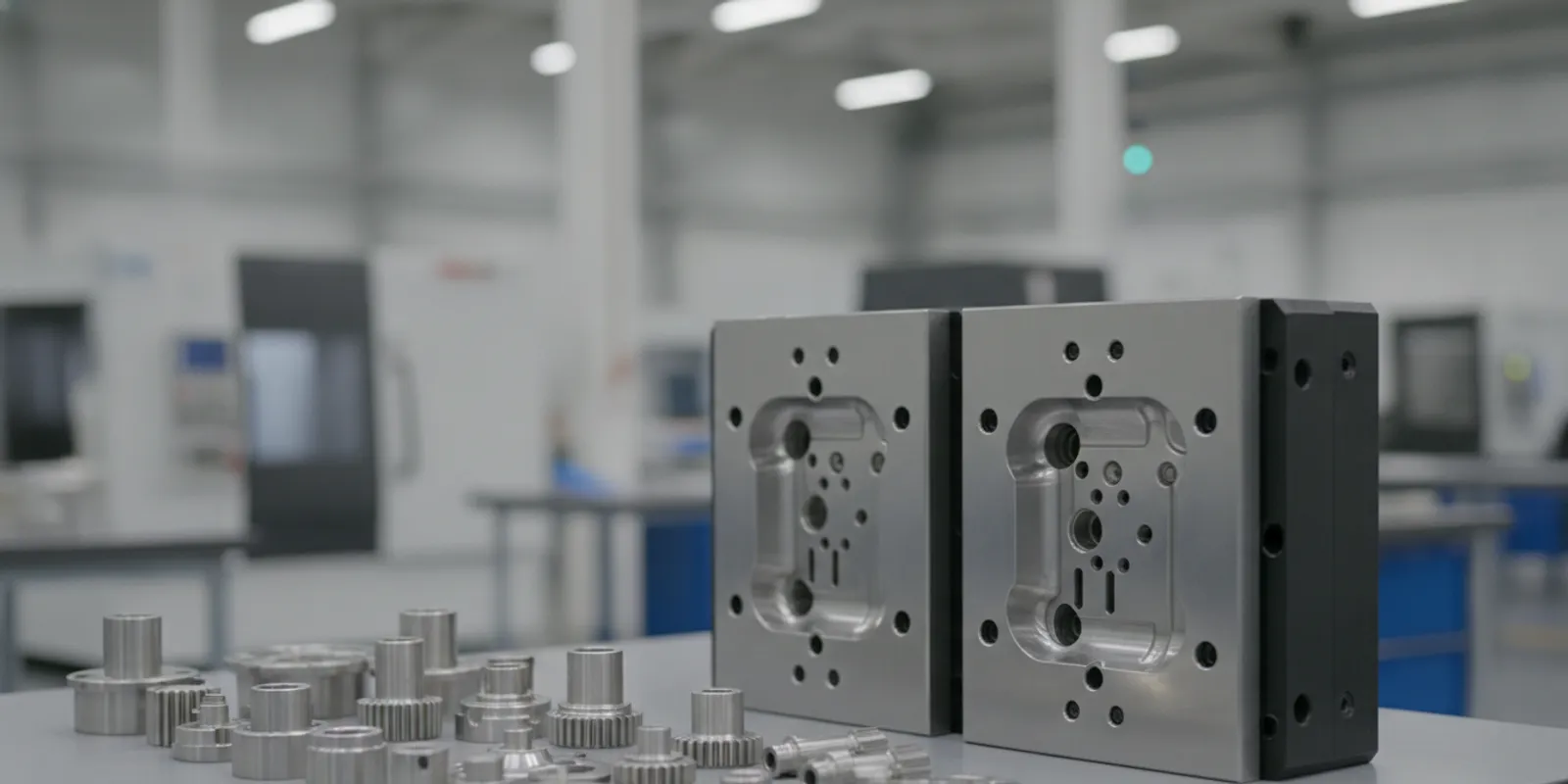
Metal injection molding can make sense when a product needs small, complex metal components in repeatable quantities, but the process is not a shortcut around design review, tooling decisions, or validation. This guide shows sourcing, engineering, and program leaders how to evaluate the process and the supplier before committing a part to a production route.
Discuss your metal component project
What does a useful evaluation need to answer?
A good evaluation is not just a check that a supplier has heard of metal injection molding. It must establish whether the part, material, expected demand, quality requirements, and program plan fit the process. It should also show what evidence will be produced before a buyer approves production.
Start with five decisions:
- Part fit: Are the component’s size, geometry, wall transitions, features, and tolerances appropriate for a molded and sintered metal part?
- Demand fit: Does expected repeat demand support the tooling and process-development effort? Ask for a project-specific assessment rather than assuming a universal volume threshold.
- Material fit: Can the supplier propose a material that meets the part’s functional requirements and can be processed consistently?
- Evidence fit: Can the supplier explain how samples will be measured and tested against agreed requirements?
- Program fit: Are design decisions, tooling ownership, change control, production release, and communication responsibilities clear?
These questions are connected. A part can look suitable in a CAD model yet be difficult to fill, debind, sinter, inspect, or assemble. A seemingly acceptable process proposal may also fail to address what the buyer needs to verify. Treat process selection and supplier selection as one evidence-based review, not separate procurement exercises.
What is metal injection molding, in practical terms?
Metal injection molding, often shortened to MIM, combines a metal powder with a temporary binder to create feedstock that can be shaped in a mold. After molding, the binder is removed in a debinding step and the remaining metal part is sintered. Sintering bonds the metal particles and changes the part’s dimensions as the material consolidates.
The sequence matters when evaluating a design. The part leaving the mold is not yet the finished metal component. It must pass through additional process stages, and the geometry and process plan must account for the changes and constraints those stages introduce. A supplier should be able to describe the route in language that connects each operation to the drawing requirements and the control plan.
Buyers should not confuse MIM with ordinary plastic injection molding. Both use a mold to shape material, but the feedstock, downstream operations, and final part are different. EMS Technologies lists metal injection molding and injection-molded plastics as distinct capabilities. Its injection-molded plastics capability page describes the polymer process, so it should not be treated as a description of MIM specifications or results.
Nor is MIM a universal substitute for machining, stamping, casting, or another established route. The useful question is whether its combination of geometry, material, production repeatability, and total program requirements works for this particular component. Compare alternatives using the same part definition and acceptance criteria.
Which parts should enter an MIM review?
Consider MIM when a component has a three-dimensional shape or a set of features that may be difficult or costly to produce through a simpler route, and when the part is small enough for the proposed equipment and tooling. Complex features alone do not prove fit. Their value must be weighed against the size of the part, the number of components needed, material behavior, finishing operations, and the cost and risk of dedicated tooling.
Build an initial part profile before asking a supplier for a recommendation. Include the component’s function, the interfaces it must fit, the loads or operating conditions it will encounter, surfaces that matter, and any features that must be controlled. Separate essential design requirements from preferences that might be revised. This helps engineering and sourcing discuss trade-offs without weakening requirements by accident.
Look closely at geometry that can create process or inspection challenges. Ask the supplier to review thin and thick regions, abrupt section changes, long or narrow features, holes, undercuts, small details, and areas that could distort or be difficult to measure. These are review prompts, not automatic reasons to reject MIM. Their effect depends on the actual part and process proposal.
Also identify features that will be created after molding. Threads, critical bores, sealing surfaces, mating faces, and other precision features may need secondary operations or a different design approach. Do not assume every feature can be formed as molded or that a secondary operation will be included. Request a feature-by-feature explanation of how the proposed route makes and verifies each critical characteristic.
How should you define the part before asking for a quote?
A quote request is only as useful as the package behind it. Send a controlled drawing or model, a bill of materials where relevant, the current revision, and a written list of requirements. Make it easy for the supplier to distinguish released information from preliminary concepts.
For the component itself, define:
- Overall dimensions, units, material callout or performance requirements, and the drawing revision.
- Critical dimensions and tolerances, with a clear indication of which are essential to fit or function.
- Surface, appearance, cleanliness, and marking requirements, if applicable.
- Part interfaces, mating components, and any assembly conditions that affect acceptance.
- Operating environment and use conditions that engineering has established as relevant.
- Required tests, inspection records, traceability, packaging, and documentation.
Attach a model only if the supplier can identify its revision and authority relative to the drawing. If the model and drawing disagree, state which document governs and ask the supplier to identify conflicts before proceeding. A file name is not a change-control system; use a revision and release record that both sides can reference.
Define demand as a realistic range and explain the assumptions behind it. Separate prototype or validation quantities from anticipated recurring demand. If demand is uncertain, say so. Avoid presenting a single optimistic annual figure as a firm commitment when the product plan is still moving. The supplier needs enough context to discuss tooling and capacity planning, while the buyer needs a quote that does not disguise uncertainty as certainty.
Finally, state what you want priced and what is still open. Ask the supplier to identify assumptions, exclusions, proposed secondary operations, and unresolved technical questions. No general price, minimum order, or production lead time can be applied safely to every MIM component; request a project-specific proposal based on the controlled package.
How do you assess geometry and design-for-manufacturing input?
Ask for a structured design review, not a vague statement that the part is manufacturable. The review should name the drawing revision, call out specific features, explain concerns, and distinguish required changes from options that may improve process robustness or cost. Keep the buyer’s functional requirements visible throughout the discussion.
For each proposed change, ask four things: What problem does it address? Which part requirement does it affect? What evidence supports the recommendation? What is the consequence if the design remains unchanged? This helps the team avoid accepting a suggested simplification that compromises function, or rejecting a change that could reduce a real production risk.
Review dimensional strategy early. Not every surface needs the same tolerance, and overly broad use of tight tolerances can constrain process choices and increase inspection effort. On the other hand, relaxing a dimension without knowing its effect on assembly or performance is not a sound cost reduction. Ask engineering to identify critical-to-function characteristics and document the reason for each requirement.
Make the review iterative. Record the initial supplier comments, the design owner’s disposition, and the released revision that incorporates approved changes. For features the supplier cannot directly inspect or form as proposed, agree on the alternative control method before tooling is finalized. A clean design handoff reduces later disputes about whether a sample differs from an obsolete model or whether a requirement was understood.
What should the material discussion cover?
Material selection begins with what the part must do, not simply with a familiar grade name. Describe the functional requirements: for example, the relevant mechanical, environmental, wear, corrosion, magnetic, electrical, or appearance needs. Only include conditions that apply to the product, and do not substitute a supplier’s general material suggestion for engineering approval.
Ask the supplier to name the proposed material and explain how it addresses the requirements. Clarify what material records or test evidence will be available, whether the proposed material is tied to a specified source or a broader material definition, and how substitutions would be reviewed. If the part is safety- or performance-critical, define the approval authority and evidence needed before a material change can be accepted.
Consider the relationship between the material and the finished geometry. A material proposal is not complete if it ignores the component’s section changes, features, post-processing needs, or intended service. Where a property must be verified, state the test method or ask the supplier to propose one for engineering approval. Be precise about whether a requirement applies to a material coupon, a finished part, or the assembled product.
Keep requirements and preferences separate. A preference can be explored as an option; a mandatory material or performance requirement needs to appear in the controlled specification. If the supplier recommends a change, ask for a documented comparison and confirm that the change does not conflict with customer, regulatory, or product obligations. Do not infer regulatory approval from a supplier’s market experience.
What process explanation should a supplier provide?
The supplier should explain the planned sequence from feedstock preparation through molding, debinding, sintering, and any finishing or inspection operations included in the proposal. The purpose is not to demand confidential process recipes. It is to understand the process route, identify the operations that affect the part, and establish how the supplier will control and verify the result.
Ask how the supplier will confirm that the part can be molded consistently and how the transition from a molded shape to a finished sintered part is addressed in the process plan. Ask which operations create or influence the characteristics your drawing controls. The answer should make clear where the part is measured and what records are retained for the agreed quality requirements.
Discuss feedstock and process changes explicitly. Determine how changes to material, feedstock source, tooling, operating conditions, equipment, finishing, or production site will be evaluated and communicated. The buyer and supplier should agree which changes require prior approval, which require notification, and what revalidation evidence is appropriate. Do not assume a supplier will apply the buyer’s change rules unless they are documented.
Ask what can be shared to demonstrate process control: a process flow, a control plan, inspection steps, sample records, or a summary of the validation approach. The right depth depends on risk and contract terms. The goal is a credible account of how the finished part will meet the drawing repeatedly, not access to proprietary parameters that are not needed for acceptance.
How should tooling and ownership be evaluated?
Tooling is a major program decision, so clarify it before authorizing design or fabrication. Ask who will design and make the tool, where it will be maintained, how tool changes are approved, and what the quote includes. Identify whether tooling is quoted separately and what deliverables, documentation, or review gates are part of the arrangement.
Agree who owns the tool and what that ownership means in practice. Address access, maintenance, storage, use restrictions, transfer, and the conditions for relocation or retirement. The commercial agreement should state who pays for repairs and modifications, and how the parties handle wear or damage. These provisions are project-specific; do not rely on assumptions formed from another supplier relationship.
Request a tooling review before release. It should tie the proposed tool design to the controlled part revision and show how key features will be formed and inspected. Agree how the buyer can review critical decisions without unintentionally delaying the program. Establish a sign-off record so both parties know which tool revision and part design are authorized.
Plan for engineering changes after tooling begins. Define how a requested change is assessed for technical effect, cost, timing, sample requirements, and documentation. A late change can affect more than the tool itself: it may alter the process plan, inspection method, validation evidence, and release schedule. A change log with decisions and approvals is more reliable than informal email threads.
What evidence belongs in a sample and validation plan?
Before ordering samples, decide what the samples are meant to prove. A prototype can answer a design or fit question without demonstrating that a mature production process is stable. A production-intent sample should be made using a process and tooling route that are representative of the planned production method. Label the purpose so no one treats preliminary parts as production approval.
Create an acceptance plan tied to the drawing and intended use. It may include dimensional inspection, material evidence, functional checks, visual review, assembly fit, or other tests relevant to the component. Select the inspection method for each critical characteristic and agree on the record format. If the measurement method itself is uncertain, settle that before using results to approve a design.
For a useful sample report, ask for identification of the part and revision, sample quantity, production route, inspection scope, measurement results, deviations, and unresolved issues. Ask the supplier to distinguish actual measured data from a certificate or general statement of conformance. Confirm how nonconforming samples will be contained and how corrective actions will be assessed.
Define the gate for moving forward. The buyer might require engineering approval, quality approval, customer acceptance, or a combination, depending on the program. Specify who signs, what evidence is required, how exceptions are handled, and whether a deviation is temporary or permanent. A shipment of samples is not itself a production release.
How do you evaluate inspection and quality controls?
Start from the characteristics that matter to function and build an inspection plan around them. Ask how incoming material, in-process work, and finished parts are checked where relevant to the supplier’s proposed route. Request a clear relationship between each characteristic, the inspection method, the frequency or sampling approach, and the record used to show the result.
Explore measurement feasibility. Small or intricate features may require a suitable fixture, instrument, or agreed method. Ask who will validate the measurement approach and how the supplier will handle a feature that is difficult to access. If buyer and supplier use different methods, compare them before a disagreement arises over whether a part passes.
Discuss traceability at a level matched to program risk. Agree what identifiers will connect a shipment to its production records, material information, inspection results, and approved revision. Decide how long relevant records must be retained and how quickly they must be available. Do not request a label or record that the receiving process cannot use.
Ask how nonconforming product is identified, segregated, reviewed, and dispositioned. Confirm who can authorize rework or use-as-is acceptance, and who receives notice of a quality issue. Also agree how corrective-action requests will be documented and closed. These are general supplier-control questions; they should become explicit requirements in the quality agreement or purchase documentation when they apply.
How can you make the commercial proposal comparable?
Ask every supplier to respond to the same part revision, demand assumptions, scope, and evidence requirements. A lower-looking number may exclude tooling, finishing, inspection, packaging, or validation work that another proposal includes. A higher proposal may include more engineering or documentation. Normalize the scope before drawing a conclusion.
| Proposal item | What to request | What to clarify |
|---|---|---|
| Tooling | Separate description and project-specific price | Ownership, maintenance, changes, transfer, and included design work |
| Part production | Quote basis for the stated demand range | Material, assumptions, included operations, and quantity breaks if offered |
| Secondary work | List finishing, machining, or other operations | Which drawing features each operation creates or verifies |
| Validation | Sample plan and reporting scope | Sample purpose, tests, approvals, and treatment of deviations |
| Quality records | Inspection and traceability deliverables | Methods, format, retention, and any separately scoped effort |
| Program assumptions | Open questions, exclusions, and dependencies | Who supplies parts or information and who approves changes |
Keep recurring unit price separate from one-time or nonrecurring costs. Ask how a quote changes when demand, material, revision, or scope changes. Do not compare bids on a per-part number alone if one supplier has assumed a different process route or acceptance standard.
Review commercial risk alongside price. Consider the clarity of the scope, tooling terms, change process, evidence package, and communication plan. If the supplier’s proposal is conditional, record the conditions and identify which must be closed before purchase order release. An unresolved technical assumption should not be buried in a spreadsheet note.
How should demand and production readiness be discussed?
Share the best available view of demand without implying certainty that the business does not have. Explain whether quantities are forecast, committed, launch-related, or potential future demand. Note expected changes in the product mix or design if known. The supplier can then state what assumptions it used and what would trigger a revised plan.
Separate qualification quantities from recurring production. A program may need engineering samples, validation builds, launch quantities, and subsequent replenishment, each with different approval conditions. Align these stages with procurement documents and inventory policy. Do not let a sample purchase order silently become authorization for recurring production.
Before production release, confirm that the controlled drawing, approved material, tool status, process route, inspection plan, packaging requirements, and change-control contacts agree. Resolve open deviations or list them in a formally approved record. Make sure the receiving team knows how to identify the first production shipment and what documents should accompany it.
Ask the supplier how it will notify the buyer of a risk that could affect production continuity or conformance. Agree on escalation contacts, the information needed for an initial notice, and the cadence for status updates during an active issue. Avoid setting an expectation for a response time unless both parties have agreed to it in the program terms.
What questions help assess the supplier’s program management?
A capable technical proposal can still leave gaps if no one coordinates the work. Ask who will manage the inquiry, technical review, proposal, purchase order, procurement, samples, testing, shipment, and fulfillment handoffs. Clarify which activities the supplier performs and which rely on a partner or on the buyer. Avoid inferring that all steps occur in one building or under one organization’s direct control.
Agree on a working communication plan. Identify the buyer’s engineering, sourcing, quality, and program contacts, along with the supplier’s points of contact. Decide where decisions and action items are recorded, how revisions are distributed, and how unresolved issues are escalated. A concise decision log can prevent contradictory instructions from reaching tooling or production teams.
Discuss the program gates and dependencies. For each gate, name the required input, owner, decision, and output. Examples include technical review completion, tooling approval, sample evaluation, validation acceptance, and production release. Set dates only after the people responsible have reviewed the dependencies and agreed on a realistic plan.
EMS Technologies describes program management across the RFQ, proposal, purchase order, procurement, kitting, testing, shipment, and fulfillment stages. That published capability is a starting point for a project discussion, not a promise that every activity applies to every MIM program. Ask how responsibilities would be defined for your part and what information is needed to scope the work.
What belongs in a practical MIM RFQ packet?
A focused packet gives suppliers enough information to identify fit, scope, and unknowns without pretending every engineering decision is final. Include the following items where available:
- Part definition: Controlled drawing, model, revision, units, and an explanation of which document governs.
- Function and requirements: Part role, mating interfaces, critical characteristics, operating conditions, and applicable performance tests.
- Material direction: Required grade or properties, approved alternatives if any, and evidence needed for approval.
- Demand picture: Prototype, validation, launch, and recurring quantities, with forecast assumptions stated plainly.
- Scope: Molding, finishing, assembly, inspection, packaging, documentation, and any work the buyer will manage.
- Quality expectations: Inspection records, traceability, change control, nonconformance handling, and approval gates.
- Commercial questions: Tooling ownership, payment milestones if applicable, quote format, assumptions, and exclusions.
- Program contacts: Technical and commercial owners, decision makers, and the preferred way to resolve drawing questions.
Mark uncertain information instead of leaving a supplier to guess. Ask the supplier to return a list of questions, assumptions, and feasibility risks with its response. For a preliminary concept, request a feasibility discussion before treating a budgetary estimate as a firm production quote. When the design is released, issue the controlled package again and require confirmation that the proposal matches it.
How should you review supplier answers?
Look for answers tied to your part rather than generic statements about capability. A useful response references the drawing revision, highlights specific technical risks, explains the proposed route, and identifies what must be confirmed. It should distinguish demonstrated facts from proposed plans and open assumptions.
Use a simple review record with columns for requirement, supplier response, evidence, open question, owner, and decision. Score only criteria that the team has defined in advance. If a supplier says a feature is acceptable, ask what review supports that conclusion. If a supplier says a test is available, confirm that it is relevant to the requirement and included in the project scope.
Watch for warning signs: a quote that does not identify the revision; an unqualified promise that every feature is achievable; unclear ownership of tools or records; no distinction between sample and production approval; or a proposed material that has not been reviewed against the part’s function. These are prompts for follow-up, not automatic proof that the supplier is unsuitable.
Follow up in writing. Capture the revised drawing, accepted deviations, scope changes, and agreed actions. When a verbal discussion settles an important point, record the decision and ask the appropriate owners to confirm it. That discipline helps prevent a proposal, purchase order, and engineering release from describing different versions of the project.
How does MIM compare with other routes?
Compare routes against the complete part requirement, not a simplified list of process labels. MIM may be worth evaluating for a small, intricate metal component with repeat demand, but an alternative may be preferable if the geometry is simpler, demand is limited, the component is large, or a different route better satisfies material and performance needs. These are screening considerations, not universal selection rules.
Ask engineering and suppliers to compare at least the following: achievable geometry, material options, critical dimensions, secondary operations, inspection approach, tooling investment, expected quantity range, design flexibility, and program risk. Use consistent assumptions across the alternatives. If one route includes finishing and validation while another excludes them, the comparison does not yet answer the buyer’s question.
Consider the cost of a design change, not only the first released design. A product under active development may value flexibility more than a stable component with well-understood demand. Conversely, a complex component with repeatable requirements may justify investing in a dedicated route after the technical and commercial case is demonstrated. Ask each supplier to identify what would make its recommendation change.
Do not force a single answer too early. A feasibility review may show that the design should be simplified, that an alternative material or process should be examined, or that the team needs more information about demand and performance. Document the reason for selecting a route so future program changes can be assessed against the same decision logic.
What should be confirmed before releasing the program?
Use a release checklist to make sure the technical, quality, commercial, and program decisions are aligned. Confirm the part revision and approved material; tool ownership and status; agreed production route; critical characteristics and inspection methods; validation results and approvals; packaging and records; change-control process; and the purchase-order scope.
Verify that supplier and buyer records use the same identifiers. The part number, revision, tooling reference, material, and sample or validation lot should be traceable across drawings, reports, purchase orders, and shipment documents. Resolve conflicts before recurring production. If a requirement is waived, state the affected parts or lots, approval, duration, and conditions for closure.
Agree what happens when the product or process changes after release. Name who reviews the change, what evidence is needed, whether samples are required, and who authorizes renewed production. A change to a seemingly minor feature can affect molding, downstream processing, inspection, assembly, or customer acceptance. Reassess rather than assuming the existing approval automatically covers it.
Finally, review the first production shipment against the agreed release conditions. Check identification and required records, inspect the characteristics specified in the plan, and route discrepancies through the agreed process. Once the launch is stable, continue to monitor the controls and escalate meaningful changes or repeated issues through the program’s quality process.
How can you start a supplier conversation?
Bring a concise project brief, a controlled part package if available, and a list of the decisions still open. Explain what the part does, what must be true of the finished component, how demand is estimated, and what evidence your team needs to approve production. Ask the supplier to identify feasibility questions and quote assumptions rather than asking for an unsupported yes-or-no answer.
For a prospective partner, review the scope of its manufacturing capabilities and how it coordinates a project. EMS Technologies serves organizations across sectors including medical products, marine equipment, lighting and mobile communications, transportation, industrial, consumer, and alternative energy. Its markets served page outlines those sectors. Industry experience does not replace part-specific engineering review or establish a certification, so keep the discussion anchored to your requirements.
When you are comparing manufacturing partners, the article on choosing an electronics contract manufacturer offers a broader framework for assessing supplier fit. For MIM in particular, return to the drawing, process route, tooling terms, validation evidence, and production controls in this guide.
Request a quote for your manufacturing project
Frequently asked questions
Is metal injection molding the same as plastic injection molding?
No. Both processes use a mold, but MIM shapes metal-powder feedstock and includes debinding and sintering to produce the metal component. Plastic injection molding forms a polymer part through a different material and process route.
Can every feature be formed directly in the MIM part?
No universal answer applies. The supplier needs to assess the actual geometry, material, process route, and tolerances. Some features may need design changes, secondary operations, or a different manufacturing approach. Ask for a feature-specific review.
What quantity makes MIM worthwhile?
There is no single quantity threshold that fits every part or program. Tooling, part complexity, material, production assumptions, and alternatives all matter. Share a demand range and ask for a project-specific comparison that identifies its assumptions.
What should I send before requesting a quote?
Send the controlled drawing and model, revision, material and functional requirements, demand assumptions, quality and inspection needs, and scope of any finishing or packaging. Identify open questions and ask the supplier to state assumptions and exclusions in its response.
Does a successful sample approve production?
Not by itself. The team should define what a sample proves, how it was made, which requirements were checked, and who approves the results. Production release should follow the agreed validation and documentation gates.
Metal injection molding is best evaluated through a part-specific review that connects design, material, tooling, process control, commercial scope, and validation. With those decisions documented before release, your team can make a clearer process choice and enter production with fewer avoidable assumptions.