
New Product Introduction Manufacturing | EMS
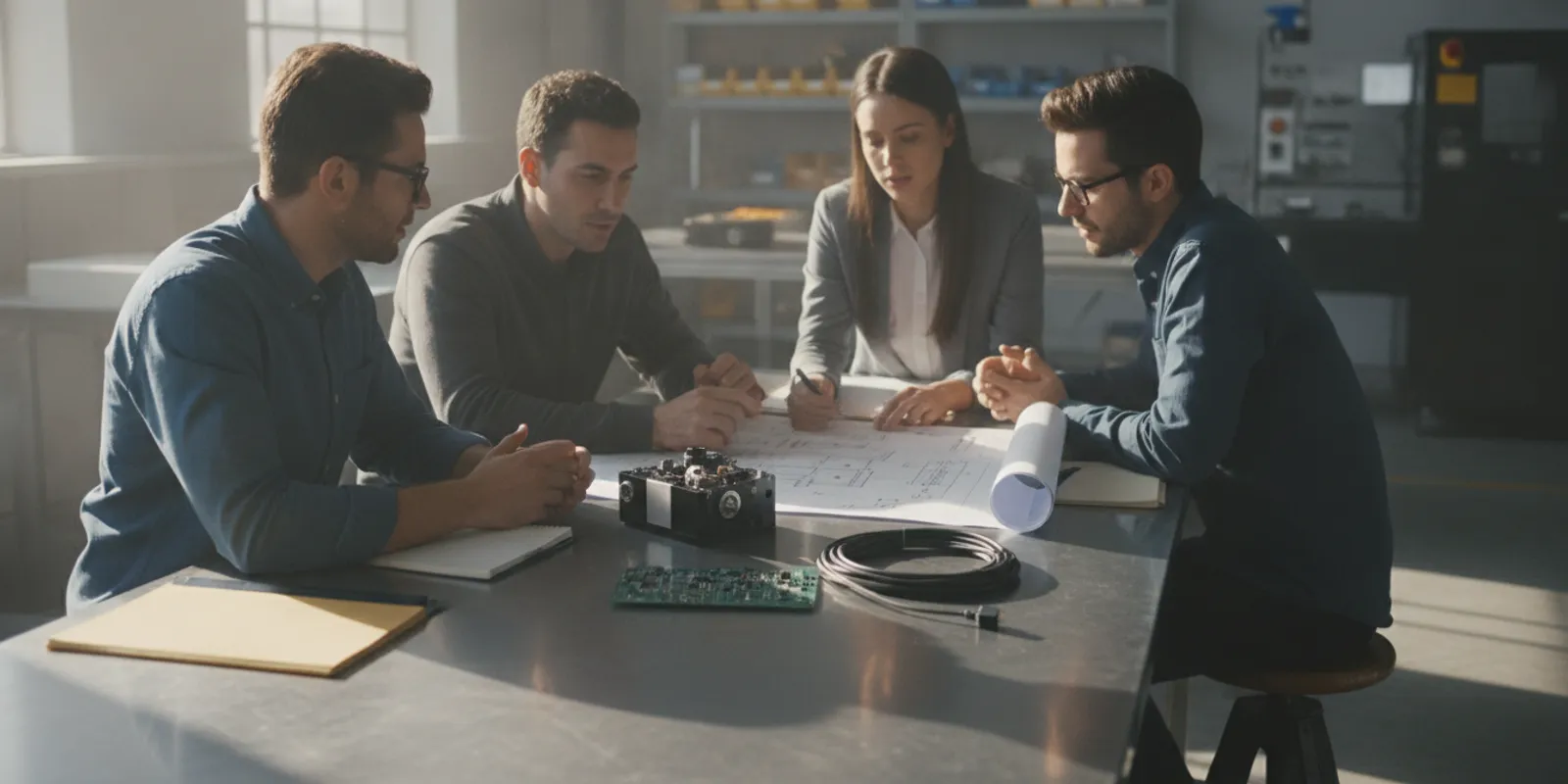
New product introduction manufacturing connects a product definition to the evidence, processes, and decisions needed to make the product repeatably. For sourcing, engineering, and program leaders, the difficult part is often not choosing a single operation. It is coordinating design information, components, assembly, inspection, test expectations, and ownership while important details are still being resolved.
What does new product introduction manufacturing cover?
New product introduction, or NPI, is the set of connected activities that moves a product from a defined need toward a controlled manufacturing program. It is not one universal sequence with identical gates for every product. The scope depends on product complexity, the maturity of the design, the manufacturing processes under consideration, customer requirements, and which activities the buyer expects a partner to perform.
A small electronic unit may include a printed circuit board assembly, a cable, an enclosure, and final assembly. Each element can have its own drawings, materials, production steps, inspection needs, and suppliers. A product with molded or machined parts introduces different process questions. Regardless of the mix, teams need a shared picture of what is being built, which configuration is current, who decides open issues, and what evidence supports moving forward.
A practical introduction effort commonly considers these connected areas:
- Product definition: intended function, interfaces, drawings, bill of materials (BOM), revision status, and known open design questions.
- Process scope: parts, assemblies, operations, external dependencies, and handoffs that are included in the proposed work.
- Readiness evidence: sample configuration, inspection or test results, deviations, and remaining risks to examine.
- Quality expectations: acceptance criteria, methods of checking, records, and responsibility for review.
- Program control: decision owners, action tracking, document control, assumptions, and approval points.
These are planning prompts, not a claim that every project requires the same documents or a particular approval system. Buyer and manufacturing partner should define what is appropriate for the product and agree on how to document it.
Why separate product definition from production assumptions?
A drawing or concept can leave room for interpretation. One team may regard a dimension as critical while another treats it as informational. The BOM may identify a part without stating whether substitutions are acceptable. A test may be mentioned without defining its purpose, conditions, or pass criteria. If assumptions remain implicit, different suppliers can prepare responses to different versions of the request.
Start by collecting the latest controlled product files. Make the revision visible on the drawing and BOM, and include a date or other agreed identifier. List documents that are still provisional. If a component is under evaluation, say so rather than presenting it as an approved production choice. A short open-issues register can separate confirmed requirements from questions to resolve.
It also helps to distinguish product requirements from requested manufacturing activities. For example, a buyer may require a cable connection to meet a defined interface, but the supplier may need to recommend how the cable is routed or assembled. State the required outcome, identify any known constraints, and ask the partner to explain its proposed approach. Avoid describing a preferred process as mandatory unless the requirement truly calls for it.
For each unclear item, record four things: what is unknown, why it matters, who can decide, and when the decision is needed. This turns a vague concern into an actionable discussion. A sourcing leader can then compare whether proposals address the same confirmed scope or rely on different assumptions.
What belongs in an initial product information package?
The aim of an initial package is not to make an immature design look final. It is to make the current state understandable enough for a useful technical conversation. Send the files that describe the product and clearly identify gaps. Use a contents list so both sides can confirm which revision was received and which inputs remain outstanding.
- Product overview: explain the product's function, major assemblies, intended operating context, and the current development stage.
- Drawings and models: identify each file, revision, units, and whether it is approved, in review, or preliminary.
- BOM: include part identifiers, descriptions, quantities, and status. Flag components still being selected or evaluated.
- Interfaces: clarify mechanical, electrical, or other connections that affect fit, assembly, or test.
- Quality inputs: state known acceptance criteria, inspection points, tests, and required records.
- Commercial context: describe the kind of quote or evaluation requested without inventing volume, timing, or scope assumptions that have not been approved.
- Open questions: list decisions the team expects to discuss, with an owner where known.
For an electronic product, be explicit about whether the request concerns a PCB assembly alone or a broader build. Identify board data, component sourcing expectations, assembly information, and test requirements that are available. If the request includes cables or wire harnesses, note connector types, pin assignments, length, routing constraints, and relevant checks. EMS Technologies lists PCB assemblies, cable assemblies and wire harnesses, magnetics and coil winding, and turnkey assembly among its capabilities; the exact requested scope still needs project-specific review. The cable assemblies and wire harnesses capability page provides a starting point for a focused discussion of those requirements.
Before sharing sensitive files, agree on the appropriate transfer and confidentiality process with the prospective supplier. Confirm the supported file types and channel instead of sending controlled material through an unverified route. Keep an internal copy of the package index and the date it was shared.
How should prototype builds answer specific questions?
A prototype is most useful when the team knows what it is intended to demonstrate. A build may help assess fit, function, assembly sequence, component interaction, test access, or a design alternative. It does not automatically prove that production processes, supply assumptions, inspection methods, or the final configuration are ready. The prototype's purpose and limitations should be recorded alongside the results.
Before a build, write a brief evaluation plan. Name the configuration, identify any deviations from the intended product, and specify the questions being tested. If the question is whether two parts fit, define the relevant interface and the observation that would resolve it. If the question concerns an electronic function, state what behavior is to be examined and what equipment or conditions are involved, where applicable. Keep the plan proportionate to the decision; do not create paperwork without an intended use.
Afterward, capture what happened in a way that informs the next decision:
- Identify the sample and its revision or configuration.
- Record materials, components, or processes that differed from the intended build.
- Describe the checks performed and the results, including observations that were not planned.
- Separate confirmed findings from opinions or unresolved questions.
- Assign each needed change or follow-up to an owner and a review point.
Suppose a trial assembly shows that a cable route interferes with an enclosure feature. The useful conclusion is not simply “revise the cable.” Record the location of the interference, the configuration reviewed, whether the enclosure or cable geometry is being reconsidered, and which drawing or assembly instruction may be affected. Then verify the updated arrangement in the next appropriate review. This prevents one sample observation from turning into an untracked change across connected parts.
How can teams control design changes during introduction?
Design evolution is normal during development, but uncontrolled change makes it difficult to tell whether a sample, quote, or inspection result applies to the current product. Use a change log or another agreed method to connect each proposed change to the affected documents and decisions. Record the reason, the person authorized to approve it, the effective revision, and any impact review needed.
Look beyond the item named in a change request. A connector substitution can affect a cable assembly, board footprint, enclosure opening, test setup, or work instruction. A material adjustment can influence process selection, appearance, fit, or inspection. A fastener change may alter assembly access or the parts list. These are examples of possible dependencies, not automatic consequences; ask the relevant technical owners to assess them rather than assume.
A useful review can follow this sequence:
- Describe the proposed change: identify the affected part, interface, or requirement and the reason for considering it.
- Map related elements: check connected components, assemblies, tooling or fixtures, tests, records, and purchasing information.
- Assess evidence: decide whether existing sample results remain applicable or require a new evaluation.
- Approve and release: identify who authorizes the change and when the updated revision becomes the controlled version.
- Communicate: confirm that engineering, sourcing, quality, and manufacturing contacts have the same current information.
Do not treat a file's most recent timestamp as proof that it is the approved version. Use a clear revision identifier and the agreed document-control method. If the supplier has already quoted or started work based on an earlier configuration, ask what must be reviewed before the change is incorporated and whether the agreed scope needs updating.
Which process and quality questions should be settled?
Before a team treats a product as ready for a next stage, it should know what “acceptable” means for the decisions at hand. Separate characteristics essential to function, safety, fit, or customer requirements from preferences that may be negotiable. For each required check, clarify the method, acceptance criteria, responsible party, and record expected when those details are relevant.
Ask the manufacturing partner to explain the proposed process at a level that supports review. Which operations are included? What information or materials must be supplied? Where do inspection and testing occur in the process? Are any activities dependent on another site or partner? What records can be provided? These questions are intended to clarify a particular proposal; a general list of capabilities does not establish that every operation is included or performed in one building.
Quality evidence must also be matched to the work being evaluated. Request the documents relevant to the specific entity, site, activity, and product scope in your program. For example, EMS Technologies identifies an SGS ISO 9001:2015 certificate held by EMS Technologies Co., Ltd. in Taichung, Taiwan, with the scope “production management of electro-mechanical products,” subject to surveillance audits. That stated scope should not be expanded into a claim that every site or process is certified, nor does a market served establish a product-specific regulatory approval.
For your own project, ask the supplier to identify what evidence it can provide and what the evidence covers. If the buyer has required forms, standards, or customer-specific controls, provide them early and ask whether the proposed scope can address them. Document gaps or conditions rather than assuming that a certificate, test reference, or general capability statement answers every requirement.
What should an NPI review compare?
A comparison matrix helps sourcing and engineering teams identify where proposals differ. Use the same prompts with each candidate, then distinguish confirmed facts from assumptions and unanswered questions. This is a working aid, not a substitute for technical assessment or a score based only on the number of boxes checked.
| Review area | Information to provide or question to ask | What the team should record |
|---|---|---|
| Product definition | Which drawings, BOM, revisions, and open design items were reviewed? | Received files, missing inputs, and the configuration assumed |
| Scope boundaries | Which parts, operations, tests, and handoffs are included? | Included work, exclusions, dependencies, and responsible parties |
| Process approach | How will the proposed process address the product's stated requirements? | Proposed steps, inputs needed, and items needing technical review |
| Quality evidence | What inspection, test, acceptance, and record requirements apply? | Method, criteria, owner, and unresolved evidence questions |
| Prototype learning | What did each sample represent, and what was evaluated? | Configuration, deviations, findings, and follow-up actions |
| Change control | How will revisions and downstream effects be identified? | Approval route, effective version, and notification expectations |
| Commercial response | Are proposals responding to a comparable scope and configuration? | Assumptions, exclusions, and requests for clarification |
Consider a simple comparison: Supplier A includes a test activity but assumes the buyer will provide a fixture; Supplier B includes fixture preparation but needs a clearer acceptance criterion. It would be misleading to compare the proposals by the activity name alone. Record the fixture ownership and test definition as separate questions, ask both parties to clarify the same point, and then compare their responses. That keeps a scope difference from being mistaken for a price or capability difference.
When assumptions remain, label them as assumptions and assign an owner to resolve them. If a proposal contains more work than requested, decide whether that addition is useful and make the comparison consistent. A short written record of the review is often more actionable than a single ranking because it preserves why the team preferred one approach and what must happen next.
How can a team prepare a useful RFQ?
A request for quotation should give a prospective manufacturing partner enough information to understand the product, requested scope, and state of design. It can include open issues. The important distinction is between confirmed requirements and provisional inputs. A clear RFQ helps the partner ask focused questions and helps the buyer understand what the response does and does not cover.
- Summarize the product: describe the function, major assemblies, development stage, and the decision the RFQ is intended to support.
- Index the files: list drawings, BOM, models, specifications, and their revisions. Mark preliminary or missing inputs.
- Define the requested work: specify the parts, processes, assembly, testing, packaging, or other activities to evaluate, as applicable.
- State quality expectations: provide acceptance criteria and known inspection, test, or documentation needs.
- Explain uncertainties: include open design questions, potential alternatives, and known constraints without presenting an undecided choice as final.
- Request a structured response: ask for scope, exclusions, assumptions, required inputs, unresolved questions, and supporting evidence relevant to the proposed work.
- Identify contacts and decisions: name the buyer-side owners for technical, sourcing, and quality questions and state how clarification should be handled.
A useful RFQ makes it possible to trace each response to the same product definition. If the request includes electronic assemblies, state whether the scope is a PCB assembly, a cable or wire harness, or a broader turnkey assembly. If a component source or substitution policy is still open, ask the partner to identify the assumption used in its response. Do not silently let each candidate select a different interpretation.
Before sending the package, check it for conflicting revisions and missing attachments. A one-page index with file name, revision, date, and status can prevent avoidable confusion. If the buyer later updates an input, issue the revised package through the agreed channel and point out what changed. The goal is not to eliminate every question; it is to make questions visible and manageable.
How do program owners keep decisions moving?
NPI work crosses functions. Engineering may own design intent, sourcing may manage supplier communication, quality may define evidence needs, and a program lead may coordinate approvals and timing assumptions. Assign an accountable owner for each decision, even if several people contribute. Without that clarity, a technical question can sit unanswered because every participant expects someone else to decide.
Set a practical review rhythm suited to the project rather than assuming a standard cadence. Before each review, circulate the current configuration and a concise list of decisions required. During the discussion, distinguish information, recommendations, and approvals. Afterward, share actions with an owner and a due date or next review point. Mark decisions that are conditional so they are not mistaken for final approval.
A decision log can capture the question, options considered, decision and rationale, approver, date, affected documents, and follow-up. An action log answers a different question: who will do what next? Keeping both functions visible reduces the risk that an unresolved action is treated as an approved design choice or that an old decision is reopened without context.
For a cross-functional example, suppose sourcing asks whether a proposed component alternative can be used. Engineering must evaluate functional and interface implications; quality may need to consider inspection or documentation; program management can confirm the decision owner and communicate the outcome. The log should identify the exact component and revision, not simply say “alternative approved.” The buyer and supplier can then use the same decision when updating the BOM, quote assumptions, and build instructions.
How should handoffs be made explicit?
Every transition between people or activities creates a chance for information to be lost. A handoff from engineering to sourcing may need the approved BOM and substitution rules. A handoff to assembly may need the current drawing, assembly sequence, and special handling notes. An inspection handoff may need acceptance criteria and the record format. A shipment decision may depend on confirming that required checks and documentation are complete.
For each handoff, identify what the receiving person needs, who provides it, and how the recipient confirms the information is current. Include the applicable configuration, not only a link to a folder that contains several versions. If an activity is performed at a different site or through another party, clarify the responsibility and how relevant information or records return to the program team. Do not assume all steps happen in one building.
EMS Technologies describes program management across steps such as RFQ, proposal, purchase order, procurement, kitting, testing, shipment, and fulfillment. That description can help a buyer frame questions about coordination, but the inclusion and ownership of specific activities must be confirmed for the project. Ask who will communicate a revision, who will resolve a missing input, and what status information is available; do not infer a fixed schedule or service level from a general process description.
Use a brief handoff checklist for high-risk transitions: current revision confirmed; scope and acceptance criteria available; open actions visible; required materials or information identified; receiving owner named; and any condition for proceeding recorded. Tailor the checklist to the actual work so that it remains useful rather than becoming a sign-off exercise detached from technical needs.
What makes a partner evaluation specific and useful?
When evaluating a manufacturing partner, ask for a response tied to the product rather than relying only on a broad capability statement. The purpose is to learn whether the supplier understands the requirements, can explain its proposed scope, and can identify information still needed. A thoughtful question gives the supplier room to describe constraints and alternatives without implying that a particular answer has already been approved.
- Which product files and revisions did you use to review this request?
- What information is missing before you can confirm the proposed scope?
- Which activities are included, excluded, or dependent on another site or party?
- How does the proposed approach address the specific mechanical and electronic interfaces?
- What acceptance, inspection, test, or record requirements need clarification?
- Which design changes could affect connected assemblies, tooling, test arrangements, or purchasing inputs?
- What evidence would you expect the buyer to review before the next decision?
- Who should own each unresolved question, and what is the next action?
Listen for precise distinctions between confirmed information and assumptions. A helpful response explains what was reviewed, identifies risks, and says what input would resolve an open point. If you are assessing an electronics-focused engagement, this guide to choosing an electronics contract manufacturer offers additional supplier-evaluation context. Apply any general advice to the exact requirements and scope of your own program.
Match the supplier's documented capabilities to the work you actually need. EMS Technologies presents itself as an OEM/ODM contract manufacturer combining mechanical and electronic production with engineering and program management. That company description is a starting point for questions, not proof that every process is appropriate for a specific product or available in every location. Ask for project-level confirmation and review the relevant scope and evidence.
How should teams assess readiness without assuming certainty?
Readiness is a decision about whether the available information and evidence are sufficient for the next defined step. It is not a promise that no problems will appear later. A team can make the decision more disciplined by stating the next step, its entry conditions, the evidence reviewed, and any risks accepted or actions still open.
For a proposed next build, the team might confirm that the target configuration is identified, the necessary inputs are available, and the purpose of the build is agreed. For a transition to a broader production discussion, it may be more important to resolve scope boundaries, inspection expectations, supply assumptions, and the management of revisions. The precise conditions should fit the product; do not import a generic gate without checking whether it answers the decision at hand.
Use a readiness review to classify each concern as one of three types: resolved with evidence, accepted with a named owner or condition, or unresolved and blocking the next activity. For example, if a test criterion is incomplete, the team can decide whether the next activity is specifically intended to establish that criterion or whether work must pause until it is agreed. Recording the distinction prevents an open issue from disappearing into meeting notes.
Keep the decision reversible where possible. If the team learns new information, know how it can reopen or revise the decision. State the revision or evidence that would trigger another review. This is especially helpful when product development continues alongside sourcing discussions and supplier responses must be updated to match evolving requirements.
What should happen after proposals are reviewed?
Summarize the decision in writing before authorizing the next activity. Identify the selected scope, the product configuration and document revisions, exclusions, assumptions, required evidence, and open actions. Name the owner of every item that remains. If proposals were compared, retain the reason for the choice and the clarifications that made the responses comparable.
Check that commercial terms and responsibilities are documented in the applicable agreement or purchasing documents. A planning conversation is not a replacement for an approved scope. Confirm which documents control the work, how changes will be reviewed, and who can authorize them. If a product requirement changes, determine whether the quote or plan needs to be revisited before proceeding.
Where a request concerns a specific market, distinguish the buyer's market from the supplier's substantiated qualifications. EMS Technologies lists markets including medical products, marine, lighting, mobile communications, transportation, industrial, consumer, and alternative energy. A market listing does not establish regulatory approval or a certification for an individual product. The markets served overview can help frame an initial capability conversation; verify the requirements and evidence relevant to your own product directly.
Make the next step concrete. It may be to clarify a drawing, complete a sample evaluation, receive a revised proposal, or decide whether a supplier's stated scope fits the project. Specify the required input and decision owner rather than ending with a general instruction to “move forward.” That gives engineering, sourcing, quality, and program leaders a shared way to track progress.
Prepare for a focused manufacturing discussion
A useful introduction process links product definition, prototype learning, change control, quality evidence, supplier scope, and accountable decisions. It does not require pretending that every detail is settled at the outset. It requires making the current configuration and unresolved questions clear enough that the next action can be chosen deliberately.
Before contacting a prospective partner, assemble the controlled files you have, label provisional information, identify the most important open decisions, and state what you want the review to help determine. Then compare responses against the same scope and record what remains to be confirmed. This foundation helps a buyer turn a broad manufacturing conversation into a project-specific evaluation.
Book a meeting to discuss your project
Clear inputs and explicit decisions make it easier for your team and a manufacturing partner to understand the work, evaluate evidence, and agree on a responsible next step.