
Production Line Balancing for Contract Manufacturing Programs
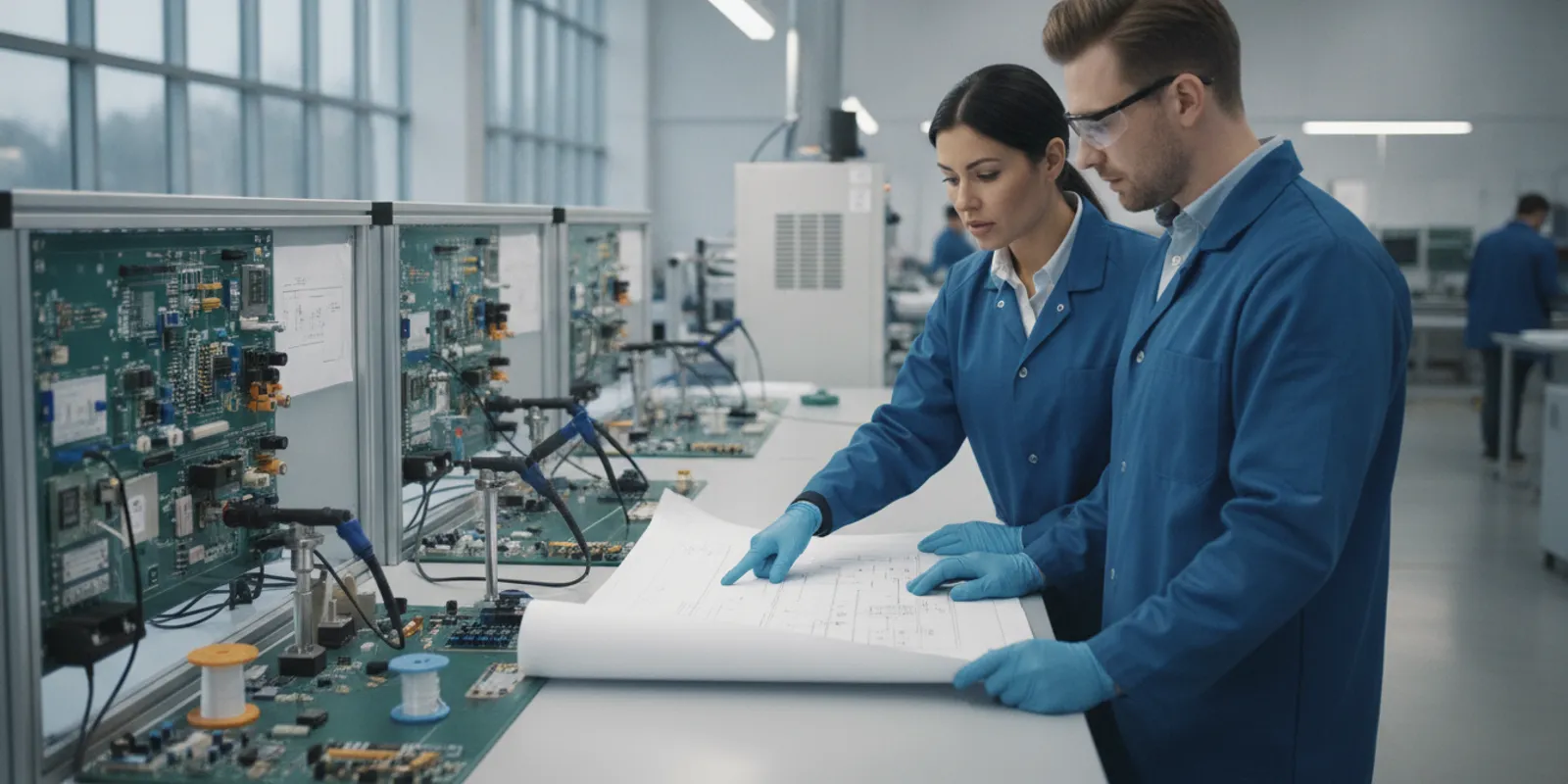
Production line balancing is the deliberate assignment of work across stations so an assembly process can meet its planned output without leaving some operations overloaded while others wait. For an OEM preparing a new build or reviewing an existing process, the objective is not simply to make every station appear equally busy. It is to design a workable flow that respects the product, the required checks, available equipment, operator skills, material presentation and expected demand. A clear review helps a contract manufacturing team identify constraints before they become costly changes on the line.
By Scott Motes, Vice President of Business Development
What does production line balancing mean in practice?
A production line is a sequence of tasks that changes materials and components into a completed product or assembly. Balancing means deciding how those tasks are grouped, sequenced and assigned to workstations or resources. The design should support the required production plan while preserving safe working methods, process controls, traceability and product quality.
Balance does not mean that every task takes the same amount of time. Nor does it mean that every station must run continuously at full utilization. Tasks differ in duration, equipment needs, skill requirements and their relationship to preceding and following operations. A well-designed process accounts for those differences. It also leaves room to deal with normal variation, replenishment, inspection, changeovers and exceptions.
For contract manufacturing programs, line balancing is a joint planning topic. The OEM brings product definition, demand assumptions, acceptance criteria and application knowledge. The manufacturer assesses process sequence, tooling and equipment needs, work content, material flow and controls. Clear discussion allows both parties to test whether the proposed process fits the product and the program assumptions, rather than treating a line diagram as a performance guarantee.
Why review balance before production is established?
Work allocation affects more than assembly speed. It can influence queue size, work in process, floor-space needs, operator movement, inspection points, material presentation and how quickly a quality issue can be isolated. An imbalance may show up as a growing queue before one operation, recurring waiting after another, overtime pressure at a constraint or missed opportunities to identify defects close to where they occur.
These effects can be difficult to correct after a process has been fixed in place. A station arrangement may make material replenishment awkward. A test step may be separated from the assembly operation that needs its result. A shared resource may be assumed to be available for two products at once. If the team catches these assumptions during design review, it can evaluate alternatives before committing to a layout or a production method.
Balancing also provides a structured way to ask whether a proposed build plan is credible. Rather than relying on one headline rate, the team can examine what work must happen, what resources are required and which assumptions remain open. For more context about how the work may be coordinated across an outsourced program, review program management alongside the manufacturing plan.
Which inputs should the team gather first?
Line design is only as useful as its inputs. Before comparing station arrangements, the OEM and manufacturing partner should agree on the current product definition and the planning case. Separate verified facts from estimates, and record who owns each open question. A drawing revision or demand assumption that changes later may invalidate task assignments and the balance calculation.
- Product definition: Identify the assembly, components, variants, revision level, drawings, bill of materials, approved substitutions and any interfaces with customer-supplied items.
- Demand case: State the expected order pattern, batch assumptions, mix of models, ramp expectations and planning horizon. Mark forecasts as forecasts rather than confirmed orders.
- Process requirements: Define the required sequence, joining or fastening methods, electrical or functional tests, inspection criteria, records and any required signoffs.
- Resource assumptions: List the equipment, fixtures, tools, test resources and operator qualifications that the process requires. Clarify whether a resource is dedicated, shared or still to be selected.
- Material conditions: Note how components arrive, how they are identified and protected, where kits or replenishment are needed, and how nonconforming or damaged material is handled.
- Operating assumptions: Document planned work periods, breaks, changeovers, maintenance, training, cleaning or other time that affects resource availability. Do not conceal these deductions inside an unexplained output figure.
- Quality and traceability: Specify what must be inspected, tested, recorded, labeled or retained, and at which process point it must occur.
The team should also identify what is not yet known. For example, a product may still be changing, a test method may require confirmation, or a supplier may be evaluating fixture options. Recording uncertainty is more useful than presenting a precise-looking balance based on unapproved inputs.
How do takt time and cycle time inform the discussion?
Takt time is a planning rate derived from the available production time and the demand to be served during that time. It is a way to express the pace required by the demand assumption. Cycle time describes how long a defined operation, station or process takes for a stated unit under stated conditions. These terms are related, but they are not interchangeable: one is a demand-based planning interval, while the other describes process duration.
A simple planning expression is:
Available production time for the planning period ÷ required good units in that period = takt time
The expression is only meaningful when both values use the same planning period and the time definition is explicit. Teams must decide whether the available-time figure excludes breaks, planned maintenance, changeovers, meetings or other interruptions. They must also agree what counts as a required good unit and how product mix affects the calculation. Otherwise two participants can calculate different takt times from the same schedule.
Cycle-time observations require similar care. A single timed run does not necessarily represent a repeatable process. Record the product and revision, task boundaries, operator method, equipment state, sample conditions and whether the observation includes routine handling or checks. If work varies by model, distinguish the variants rather than averaging them into a number that describes none of them well.
Neither takt nor cycle time alone proves a line can achieve a particular output. The actual plan also depends on the work sequence, resource availability, yield assumptions, interruptions, material supply, staffing and operating rules. Use these measures to expose questions and compare scenarios, not as a substitute for validating the process.
How should the team break work into tasks?
Start with the product flow, then divide each operation into observable, assignable tasks. A useful task list is specific enough to support discussion but not so detailed that it obscures the process. Instead of a broad label such as “assemble unit,” record the meaningful actions, required materials or tools, and the expected output of each step. Include verification and handling work when it is part of the method.
Next, identify precedence. Some tasks cannot begin until another is complete; others may be performed independently or in parallel if the product and controls allow it. A precedence diagram makes these relationships visible. It also helps the team avoid a common planning error: grouping tasks based on convenience while overlooking a required order, access limitation, curing or test condition, or inspection hold point.
Then estimate or measure task duration under defined conditions. When the product is not yet in production, distinguish estimates from observed data and state the basis for each. An estimate informed by a similar process can be a useful starting point, but similarity should be explained rather than assumed. Product geometry, fastening access, cable routing, inspection criteria and test setup can all change the work content.
Finally, note task characteristics that elapsed time does not show. A task may need a particular skill, a controlled environment, specialized tooling, a test station or a second person for safe handling. Another may be interruptible or suitable for combination with an adjacent task. Those distinctions determine whether two tasks can sensibly share a station, even when their combined nominal time appears to fit.
How can a simple line balance be illustrated?
The following example uses invented task times solely to show how a team can organize a discussion. It is not EMS Technologies production data, a process recommendation or an output commitment. Assume one product variant has four sequential tasks and a planning takt of 60 seconds per good unit. A first draft assigns each task to a separate station.
| Illustrative station | Illustrative task | Illustrative work content | Review question |
|---|---|---|---|
| A | Load and position components | 35 seconds | Are parts presented consistently and correctly? |
| B | Fasten and connect assembly | 52 seconds | Are access, tool control and connection checks defined? |
| C | Perform functional test | 70 seconds | Is the test method repeatable, and is the resource available? |
| D | Inspect and prepare for next operation | 38 seconds | Can required inspection be completed without skipping records? |
Station C exceeds the illustrative 60-second takt, so it is a candidate constraint in this simplified arrangement. The other task times should not be read as spare capacity that can automatically be transferred. Testing may need a dedicated resource; some inspection may have to occur at a defined point; tasks may not be combined because of precedence, ergonomics, space or quality-control requirements. The table prompts a focused investigation: can the test process be clarified or improved, can a compatible test activity occur in parallel, or should the demand plan or process design be reviewed?
Even where the sum of work content appears feasible, the team still needs to test the actual sequence and operating assumptions. The example omits variation, replenishment, changeovers, breaks, faults, rework, training and equipment downtime. It also assumes one product and a stable method. A real plan must explicitly address these conditions rather than treating a convenient arithmetic result as proof of production readiness.
Where should the team look for the constraint?
A constraint is the resource or process condition that limits the flow of the system in the planning case being considered. It may be a long manual task, a shared machine, a test resource, a required approval, a material shortage or a process with high variation. It can move when the product mix or operating assumptions change, so the constraint should be tied to a defined case.
Look for evidence from several angles. A queue that repeatedly accumulates before one operation can indicate a restriction. Downstream operators waiting for completed work may reveal interruption or supply problems. Repeatedly extended shifts at one step, frequent expedited requests for a shared resource, or large differences between observed task times and the plan also deserve review. Each signal needs investigation; a queue alone does not tell the team whether the cause is inadequate capacity, poor scheduling, batch policy or uneven material delivery.
Ask what happens immediately upstream and downstream. Is upstream work released faster than the next process can accept it? Does the downstream station receive units in the right sequence and at the right time? Is there a defined buffer, and what condition triggers replenishment or escalation? These questions can distinguish a true process constraint from a coordination problem.
Do not optimize one station in isolation. Increasing the pace of a non-constraint may only create more work in process and handling. Changes should be evaluated for the whole flow, including quality risk and the effect on the next process. When an operation is a constraint, consider whether a method change, work reallocation, fixture or equipment choice, parallel resource or different schedule is feasible. Any option must preserve the product requirements and be validated with the responsible engineering and quality stakeholders.
How should work be grouped across stations?
After task precedence and resource needs are understood, compare station groupings. The purpose is to create a feasible assignment, not to make a spreadsheet's station totals look identical. A balanced plan respects takt, but it also accounts for physical access, work sequence, safe movement, operator workload, error prevention and inspection controls.
One option is to combine compatible short tasks. This can reduce unnecessary handoffs, but combining work may increase cognitive load, create awkward movement or make it harder to see whether each step was completed. Another option is to separate a complex task into defined elements, if the process permits, and assign some elements elsewhere. That requires clear standard work and must not introduce omitted steps, uncontrolled variation or ambiguous ownership.
Parallel work can help where tasks are independent and the product can be controlled between them. It is not appropriate when the steps depend on a specific sequence or when parallel paths create confusion about identity, status or configuration. The team should define how branches rejoin, how incomplete work is recognized and how the correct components stay with the correct unit.
Cellular or flexible arrangements may make sense for some mixes, while a more sequential line may suit a different product and volume pattern. There is no universal layout that is best for every assembly. The choice depends on product characteristics, demand profile, available resources, material handling, changeover needs and how the process will be supervised. A manufacturer’s broader manufacturing services can help frame the processes that may be relevant to a project, but the appropriate sequence and facility-specific plan must be confirmed for that program.
What role do product design and tooling play?
Line balance is partly a manufacturing-planning problem and partly a product-definition problem. Design choices can affect how many operations are needed, whether parts are accessible, how components are oriented, and whether tools or fixtures can be used consistently. Engineering review can identify design questions before a proposed station sequence is treated as fixed.
For example, if a fastener is difficult to reach after another component is installed, the assembly sequence may need to change or the design may need review. If a cable has to be routed around a component, the team should understand whether the routing method is repeatable and how the finished route will be checked. If a fixture is needed to hold or locate a part, the team should identify its purpose, interface, ownership and validation requirements. The right response is product-specific; no single change should be assumed to solve a balancing problem.
Tooling choices can also affect work content and station flexibility. Ask what the tool controls, which product variants it supports, how it is set up and maintained, and whether its use changes the inspection plan. When the project involves tooling development, see the company’s tooling information as a starting point for a more detailed discussion. It should not be interpreted as a claim that one tooling route applies to every project.
How should material flow and layout be evaluated?
A theoretically balanced task assignment can fail if the line cannot be supplied or if people and materials interfere with one another. Map the route of components, subassemblies, packaging materials, instructions, test equipment and completed units. Identify who replenishes each point, how often replenishment is triggered, and how shortages or damaged items are signaled. Include the route for nonconforming material so it cannot be confused with work ready to proceed.
Review whether the layout supports the intended work. Are frequently used components within a sensible reach? Can an operator see the required instructions and status? Is there enough space to position the unit safely and perform the process without obstructing movement? Are completed and incomplete items clearly separated? The layout should make the correct sequence practical, not merely show equipment symbols on a floor plan.
Consider the distance and handling between operations. Extra movement can consume time and create opportunities for mix-ups or damage. Conversely, placing operations too close together may make it difficult to separate status, protect a product or perform a required check. A layout review should therefore assess the full route, points of transfer and practical working conditions, not just total floor area.
Packaging and fulfillment are part of the overall flow when they are within the program scope. The team should establish when the product is considered accepted, what packaging instructions apply, how labels and product identity are controlled, and what information must accompany the shipment. These are program requirements to agree on; do not assume a particular shipping arrangement or timing without confirmation. Review turnkey assembly if the project calls for discussion of coordinated assembly activities.
How can balance support quality planning?
A line should be designed to make required quality activities possible and visible. If inspection or test is squeezed into a station that already has more work than its planning allowance, the temptation to defer, shorten or record the check incorrectly can increase. The solution is not to remove a required check to improve a line-balance calculation. Instead, establish the required method, resource and record, then include them in the process plan.
Place checks where they can prevent or detect the relevant failure as early as practical. Define whether the check is performed by the operator, a separate inspection resource or a test system, and establish how a failure is contained. If a result must be recorded against a unit or lot, make the record part of the planned work rather than an unallocated task at the end of a shift.
Discuss error-proofing and process confirmation where they fit the product. Clear part identification, controlled instructions, fixture features and test interlocks may help prevent an incorrect sequence or missed connection, but each control has to be appropriate and validated. If the process relies on a visual cue or an operator judgment, define the acceptance criteria and training needed. Avoid assuming that a faster cycle is a better cycle if it weakens a control.
Ask how process changes will be reviewed. Changes to a fixture, task order, test parameters or staffing arrangement can affect quality and should follow the program’s change-control approach. A useful quality-control discussion should clarify applicable checks and responsibilities without implying a certification or approval that has not been established for the product or site.
What changes when a line handles multiple products?
A single-product balance may not represent a mixed-model program. Different variants can require different components, test methods, assembly sequences or task times. If the plan averages all units together, the average may hide a variant that consistently overloads one station or requires a resource not used by the other models.
Build a task matrix for each meaningful variant and mark common work, variant-specific work and alternative steps. Then define the sequence or mix expected in the planning period. The group should examine whether changeovers are required, how variant identity is established and when the line receives the correct instructions and materials. A process that is well balanced for one model can become unstable when the model sequence changes.
Where common work is shared, make sure the plan accounts for the product mix rather than counting each unit as identical. Where options are selected late, clarify how configuration information reaches assembly and test. If demand for a variant is uncertain, model more than one plausible mix and note which assumptions determine the result. These are planning scenarios, not predictions of actual orders.
For a growing product family, review whether a flexible process is genuinely practical. Flexibility may require different fixtures, instructions, component presentation or skills. A proposal to “run all variants on the same line” is incomplete until those needs, changeover controls and quality implications are described.
How should variation and operating losses be treated?
Task duration is not always constant. Variation can arise from part differences, product mix, operator experience, material presentation, equipment behavior, test results or the method itself. A plan based only on average task time can fail when a meaningful portion of work takes longer. The team should understand the distribution and causes of variation where observations are available, and label estimated variability where they are not.
Also clarify how the schedule handles breaks, planned maintenance, setups, training, meetings, changeovers, minor stops and rework. These events may not occur at every cycle, but they affect the time a resource is available over the planning period. If an allowance is used, make its basis explicit. Do not bury every uncertainty in an unexplained efficiency factor that neither party can examine.
Yield and rework assumptions require special attention. A plan for good units must account for what happens when a unit fails a check, needs repair or must be held for review. Rework may use the same stations, a separate process or a defined disposition path; the correct approach depends on the product and controls. The team should not treat rework as invisible spare capacity or count a failed unit as completed output.
When data are limited, use an incremental learning plan. Identify what needs to be measured during a trial or initial production activity, how the observations will be recorded and who will review them. A plan that distinguishes demonstrated performance from a working assumption is more useful than an unsupported guarantee.
Which measures help monitor a balanced process?
Choose measures that answer a decision question, not metrics that are easy to collect but disconnected from the process. Depending on the program, the team may review cycle time by defined operation, queue or work-in-process levels, first-pass acceptance, test completion, downtime reasons, changeover duration, shortages, rework routing or schedule attainment. Definitions, data sources and review cadence need agreement before comparisons are meaningful.
Use measures as signals for investigation. A longer observed cycle time does not automatically mean an operator is at fault; the cause may be a material issue, unclear instruction, equipment problem, product variation or a measurement boundary. A low queue can be positive, but it may also reflect a starved process. Review measures together and go to the process to understand what changed.
Set appropriate limits on interpretation. A short sample may not represent a stable process, and results from one product mix may not apply to another. A line dashboard does not replace product inspection or required records. If a metric triggers a change to staffing, sequence or method, assess whether that change affects safety, quality, training or customer requirements before implementation.
What should an OEM ask a manufacturing partner?
A useful review tests both the proposed process and the evidence behind it. Ask for a clear explanation of the assumptions, not simply a single output value. The discussion can be organized around the following questions:
- Which product revision, variants and demand scenario does this line plan cover?
- How was the task sequence developed, and which steps depend on one another?
- Which task times are observed, estimated or still unknown? What conditions were used to define them?
- What resource or operation is the current constraint, and what evidence supports that conclusion?
- How are staffing, shared equipment, changeovers, breaks, maintenance and material replenishment represented?
- Which inspections, tests, records and nonconformance controls are built into the work sequence?
- What fixtures, tooling or test resources are required, and what remains to be validated?
- How are different models, options and order sequences handled?
- What layout, space, operator movement and material presentation assumptions need confirmation?
- What would trigger a process change, who approves it and how will the change be documented?
- Which data will be captured during a trial or production review, and how will the team interpret it?
Listen for limits as well as proposals. A technically credible response should make clear what the partner can assess from the current package and what needs more information. It should distinguish a planning estimate from a validated production method and describe the next evidence needed to resolve open questions.
What belongs in a line-balancing RFQ package?
An RFQ does not need to prescribe the manufacturer’s solution. It should provide enough controlled information for a meaningful review and clearly identify what the supplier is being asked to return. Separate required deliverables from optional suggestions, and identify the document revision that governs the inquiry.
- Product drawings, bill of materials, specifications and revision history for the requested scope.
- Demand forecast, order pattern, expected mix and the planning assumptions behind them.
- Known process requirements, tests, inspections, acceptance criteria and traceability records.
- Information about customer-supplied components, approved sources, packaging or labeling requirements, where applicable.
- Known production constraints, equipment or tooling preferences and any unresolved design questions.
- Requested process-flow or station-assignment explanation, including assumptions and open items.
- Clarification of which task-time information is requested and whether estimates, trial observations or another basis should be identified.
- Questions about quality planning, material flow, product changeovers and control of nonconforming work.
- Required commercial response fields, including scope boundaries and any exclusions the supplier should identify.
Ask the supplier to flag missing inputs rather than fill gaps silently. If the product definition is preliminary, say so and ask what conclusions are provisional. If a proposed line balance depends on a future design decision or test method, name that dependency. A clear RFQ lets sourcing compare proposals on scope, assumptions, process logic and unresolved risk—not only on an output number.
How should teams move from concept to a stable plan?
Use a sequence of reviews with clear exit questions. First, establish product and demand assumptions. Next, confirm process flow, precedence and task definitions. Then assess resources, layout, staffing and quality controls. After that, review the balance against the planning case, identify risks and decide what evidence is needed to validate the proposal. This sequence reduces the chance that a polished line chart hides unresolved product or process questions.
At each review, record decisions, owners and due actions. If the BOM, drawing, forecast or acceptance criteria change, assess which parts of the analysis need to be revisited. Keep the current approved plan distinct from earlier drafts and scenarios. This matters in contract manufacturing because sourcing, engineering, quality and program stakeholders may be reviewing different versions of the same process.
Before a plan is treated as ready, verify that instructions and required records are defined, materials can be presented, the needed resources are available for the planned case, and the process for failures and exceptions is understood. Agree how initial observations will be reviewed and what constitutes a reason to revise the method. A stable plan is controlled and understood; it is not a claim that variation or change has disappeared.
Prepare for a focused manufacturing discussion
Production line balancing is most valuable when it turns a broad capacity question into specific, testable decisions about work content, sequence, resources, material flow and quality controls. OEM teams can improve the discussion by sharing a defined product and demand case, distinguishing observations from estimates, and asking how the proposed process handles variation and exceptions. The result is a stronger basis for evaluating an assembly plan with a manufacturing partner before assumptions become difficult to change.