
How to Choose a Die Casting Manufacturer
/ Company News / By
Chris Moats
A strong manufacturing plan starts with clear answers: What must the part do? How many will you need? Which dimensions matter most? These details help determine whether die casting suits your component and what support the project will require. A die casting manufacturer may review your design, recommend tooling or material considerations, and coordinate production steps such as machining and finishing. When the project includes additional mechanical or electronic components, managing those operations can matter too. This guide walks through the die casting process, its key trade-offs, cost considerations, and practical ways to compare suppliers before production begins.
Key Takeaways
- Choose die casting based on the part and production outlook: Review material, design, performance needs, order volume, and tooling costs before committing.
- Check how a manufacturer will support the program: Ask about engineering input, quality checks, communication, and how the team will manage revisions.
- Include every production step in your plan: Account for machining, finishing, and assembly, and confirm who coordinates each service.
What Does a Die Casting Manufacturer Do?
A die casting manufacturer helps move a metal part from an initial concept into repeatable production. Depending on the project, that work may include reviewing the design, building the die, producing and inspecting cast parts, and coordinating machining, finishing, or assembly. A capable partner also considers how the casting fits into your product and supply chain, so you can plan for the steps needed to deliver a finished component.
Take Parts from Design and Tooling to Production
A project usually begins with a discussion about the part’s function, operating conditions, material requirements, and expected production volume. You may provide 3D models or technical drawings for the manufacturer to review. That review can identify design features that affect casting quality, tooling complexity, cost, or lead time. Early collaboration helps align the part with its mechanical properties and end-use requirements, as IQS Directory describes.
The manufacturer then develops the die, the reusable tool that shapes molten metal. After building the die, the team produces sample parts, checks them against your specifications, and adjusts the process as needed. Ask how the manufacturer handles design reviews, sample approval, and changes before full production begins. Clear steps at this stage help both teams confirm that the part and process are ready to move forward.
Fit Die Casting Into an Integrated Manufacturing Program
A cast component may need additional work before it is ready for your product. That can include machining, surface finishing, electronic components, cable assemblies, or final assembly. When a manufacturing partner coordinates several of these services, your team can reduce handoffs and keep specifications, revisions, and schedules aligned.
Ask which services the manufacturer performs in-house and which it coordinates through outside suppliers. Clarify who tracks part revisions, manages the schedule, and communicates changes. EMS Technologies offers integrated manufacturing services that include die casting, tooling, machining, and assembly capabilities. Before moving forward, confirm which services match your project needs and how the manufacturer will coordinate each step through delivery.
Support Production With Engineering and Program Management
Engineering support connects your part design with production requirements. A manufacturer can review geometry, materials, tolerances, and expected volumes, then discuss changes that may make the part easier to produce. The right recommendations depend on your application, so share your drawings and performance needs and ask for specific feedback.
Program management helps coordinate design reviews, tooling, sampling, production, and delivery. A clear point of contact can track decisions, share schedule updates, and coordinate communication between your team and the manufacturing floor. EMS Technologies outlines its engineering and program management approach as part of its manufacturing support. When evaluating a partner, ask who will manage your program, how you will receive updates, and how the team handles approvals or production issues.
How Does Die Casting Work?
Die casting forms metal parts by injecting molten alloy into a reusable metal mold, called a die. The process starts with part and tooling design, then moves through casting, cooling, ejection, and finishing. Each stage affects part quality, so it helps to plan manufacturing requirements early.
Design and Build the Die
A manufacturer uses the part’s 3D model or technical drawings to design a hardened steel die. The design needs to account for the part’s shape, material, dimensions, and end use. It also determines how molten metal enters the cavity, how air escapes, and how the finished casting releases from the mold.
This planning can reveal design features that may make production more difficult, such as thin walls or complex details. Reviewing these points with the manufacturer before tooling begins can help align the design with performance and production goals. Early project discussions give both teams a chance to address requirements before the die is built.
Inject Molten Metal, Cool, and Eject the Part
Once the die is installed, the machine closes the mold and injects molten metal into the cavity under pressure. The pressure helps the alloy fill the die’s shape and details. The metal then cools and solidifies inside the mold. When the casting is firm enough to hold its shape, the machine opens the die and ejector pins release the part.
The die is then prepared for another cycle. Consistent equipment settings and a well-maintained mold help produce repeatable parts throughout a production run. Some operations use multi-cavity molds to form several components in one cycle. You can see how automation and tooling support repeat production in these aluminum die casting capabilities.
Trim, Inspect, Machine, and Finish Parts
After ejection, a casting often needs secondary operations. The manufacturer removes gates and runners, trims excess material, and deburrs edges. If the part has holes, threads, or surfaces that require tighter tolerances, machining may be needed. Finishing can prepare the component for assembly or its intended operating environment.
Inspection verifies that castings meet the project’s drawing and quality requirements. Depending on the part, checks may include measuring critical dimensions and examining surfaces for defects. Ask which operations a manufacturer performs in-house and how it documents inspection results. Coordinating casting with machining, finishing, and assembly can simplify production planning. Post-casting operations include trimming and deburring; EMS Technologies’ manufacturing services bring together mechanical and electronic capabilities for broader production programs.
Which Die Casting Processes and Materials Can You Choose?
The right die casting process and alloy depend on the part’s design, performance needs, production volume, and budget. These choices can affect tooling, production speed, finishing requirements, and total cost. Review them with a manufacturing partner early, while there’s still time to adjust the design.
Hot- and Cold-Chamber Die Casting
Hot- and cold-chamber die casting differ in how molten metal enters the injection system. In hot-chamber casting, the injection mechanism sits in the molten metal and feeds it directly into the die. This process is often used with lower-melting-point alloys, such as zinc, and can support fast production cycles.
Cold-chamber casting uses a separate furnace. Molten metal is transferred into a shot sleeve and injected into the die. It is commonly used for aluminum alloys, whose higher melting temperatures can put more wear on hot-chamber equipment. Magnesium alloys may be processed using either method, depending on the alloy and equipment. As IQS Directory explains, the right process depends on project goals, mechanical properties, and end-use conditions.
Aluminum, Zinc, and Magnesium Alloys
Aluminum alloys are often chosen for their combination of low weight, strength, and corrosion resistance. They can suit structural and industrial components that need complex shapes and repeatable production. TFG USA’s overview of aluminum die casting describes how the process can accommodate different part geometries, volumes, and performance requirements.
Zinc alloys can work well for smaller parts that need fine detail, thin walls, and dimensional accuracy. Magnesium alloys offer low density, making them an option when reducing weight is a priority. Each alloy has trade-offs, so assess the part’s loads, operating environment, required finish, and any machining or assembly steps. Material properties vary by alloy, and the best fit depends on the specific design and application.
Match Processes and Materials to Part Requirements
Start by defining what the part needs to do. Consider its size and shape, the loads it will carry, operating temperatures, exposure to moisture or chemicals, and required tolerances. Production volume matters too: tooling investment and cycle time can affect the cost of each option.
Ask manufacturers to review the design and explain how process and alloy choices may affect manufacturability, quality, and total project cost. Confirm whether the part will need machining, surface finishing, or assembly after casting. These steps can influence the production plan, particularly when several operations must work together. A partner with integrated capabilities, such as EMS Technologies’ manufacturing services, can help assess how die casting fits alongside tooling, machining, and other production needs.
What Are Die Casting’s Benefits and Limitations?
Die casting can produce consistent metal parts at scale, but it is not the right fit for every design or production plan. Weigh part requirements, production volume, tooling investment, and finishing needs before choosing the process.
Achieve Precision and Repeatability in High-Volume Production
Die casting injects molten metal into a reusable die under pressure. The process can produce detailed shapes, thin walls, and smooth surfaces, with consistent dimensions across large production runs. Once the die and production settings are established, repeatability can help limit variation and reduce the need for extensive finishing.
These qualities can make die casting a good option for complex components that would take more time or material to machine from solid stock. Results depend on the part design, alloy, die condition, and process controls, so confirm that a manufacturer’s equipment and inspection plan match your specifications. High-pressure die casting is used in many industries, but each application still needs a careful review of performance requirements.
Weigh Tooling Costs, Design Limits, and Trade-Offs
Die casting requires a custom die, which can make the initial tooling investment substantial. For a long production run, that cost is spread across many parts. For a small run or a design that may change, tooling expense and modification time can make another process more practical. Die casting tooling costs depend on factors such as part complexity, die design, materials, and expected volume.
Part geometry also needs to suit the process. Deep cavities, abrupt changes in wall thickness, or features that are difficult to fill may call for design adjustments or additional operations. Porosity can affect a part’s strength or ability to hold pressure, so discuss critical features, performance needs, and inspection requirements with your manufacturer before finalizing the design.
Know When Machining, Stamping, or Another Process Fits Better
Die casting is one option within a broader set of manufacturing processes. Machining may suit prototypes, smaller production runs, or parts that need precise features. Stamping can work well for high-volume components made from sheet metal. The best choice depends on part geometry, material, performance requirements, and production quantity. Manufacturers must weigh the capabilities and limitations of each method for the specific application, as outlined in this guide to die casting process selection.
Compare the full project costs and requirements, including tooling, material use, cycle time, machining, finishing, and assembly. A manufacturer with several capabilities can help you assess these trade-offs and coordinate operations. For example, EMS Technologies’ manufacturing services include die casting, machining, metal stamping, and assembly, giving teams options for planning related production work.
What Does a Die Casting Project Cost?
A die casting project’s cost depends on more than the price of each finished part. The estimate may include designing and building the die, purchasing metal, setting up production, inspecting parts, and completing operations such as machining or finishing. The right cost breakdown depends on your part’s design and performance requirements, production plans, and the services you need from your manufacturing partner.
Tooling often requires a substantial upfront investment because the die must be designed and made to meet specific part requirements. That cost is spread across the parts produced, so expected order quantities can affect the per-unit price. Changes to a design or production plan can also affect tooling and manufacturing costs, making it useful to discuss assumptions early.
When reviewing proposals, compare the full scope of work, not just the quoted part price. Check whether each quote includes the same materials, order quantities, tolerances, inspection steps, and secondary operations. A manufacturer with in-house engineering and program management can help coordinate these requirements across the project. EMS Technologies provides integrated manufacturing services that include mechanical and electronic capabilities, assembly, and engineering support.
Account for Tooling, Materials, Production, and Secondary Operations
Tooling is often a major upfront expense. Its cost depends on the die’s design, the part’s complexity, and expected production volume. Ask how the manufacturer plans for tool life and maintenance, and whether the quote covers design updates or future repairs. Careful planning can help limit defects and unnecessary costs over the life of the project, as this guide to die casting tooling costs explains.
The estimate should also identify material and production costs, along with any secondary operations. Trimming, machining, finishing, inspection, and assembly may be priced separately or included in a broader package. Confirm what is covered, and ask whether packaging and freight are included. A clear breakdown makes it easier to understand the price of producing finished, usable parts.
See How Complexity and Volume Affect Unit Cost
Part geometry influences both die design and production. Intricate shapes, thin walls, or tight tolerances may require additional engineering and process controls. Larger components may call for different tooling and production equipment than smaller parts. These factors can make a complex project more expensive than a straightforward design.
Production volume also affects unit cost. A higher quantity can spread the initial tooling investment across more parts, while material, production time, and finishing continue to contribute to each unit’s price. Some projects may cost a few thousand dollars, while larger or more complex jobs can reach tens of thousands, according to this die casting cost overview. These figures are general guidance, not a project quote. Manufacturers need details such as drawings, material specifications, quantities, and quality requirements to prepare an estimate.
Compare Quotes, Assumptions, and Total Project Costs
Request an itemized quote that separates tooling, materials, production, and secondary operations. Then check that each manufacturer has priced the same requirements, including order quantities, tolerances, inspection, and delivery. A lower unit price may not reflect the full project cost if it leaves out machining, finishing, or quality checks.
Clarify tooling ownership, maintenance, expected tool life, and fees for design changes. Ask how the manufacturer handles scrap, replacement parts, and changes to order quantities. Quotes can cover different services, so a detailed breakdown helps you compare them fairly, as this guidance on evaluating die casting suppliers recommends. Focus on the total cost of producing and delivering parts that meet your specifications, not only the tooling charge or price per part.
How Do You Choose a Die Casting Manufacturer?
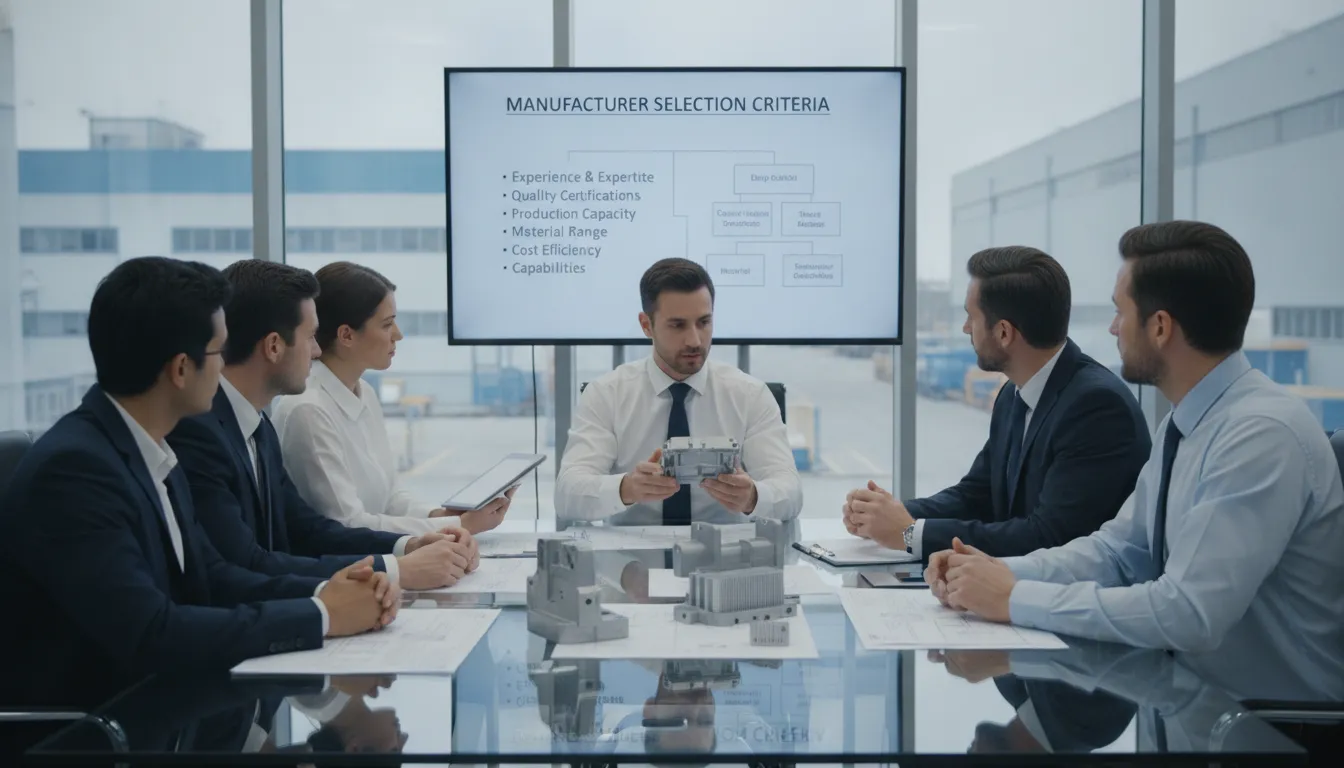
Choosing a die casting manufacturer takes more than comparing unit prices. The right partner should understand your part’s performance requirements, offer suitable production capacity, and have clear systems for quality, communication, and delivery. Look at how the team will support your project from design review and tooling through production and any finishing or assembly your parts require.
Start by preparing the information you already have: drawings or CAD files, material preferences, expected volumes, required tolerances, and target timing. Note which details are fixed and where you are open to recommendations. That gives manufacturers a clearer basis for evaluating the project and helps you compare quotes on equal terms.
It is also worth considering how die casting fits into your wider manufacturing plan. If your part needs machining, electronic components, or assembly after casting, ask how those steps will be coordinated. A partner with related services and dedicated engineering and program management support can help keep responsibilities clear throughout production. Review EMS Technologies’ manufacturing services to see how integrated capabilities can support projects that involve multiple manufacturing steps.
Use the criteria below to assess prospective manufacturers. Their answers should help you understand not only whether they can make the part, but how they will manage the work over the life of the program.
Assess Engineering Support, Design for Manufacturability, and Prototyping
A manufacturer should review your design before the die is built, not simply price the drawing as submitted. Ask how its engineers assess geometry, wall thickness, draft angles, alloy choice, and end-use requirements. Early design-for-manufacturability feedback can reveal changes that simplify casting, improve part performance, or reduce the risk of expensive tooling revisions.
Clarify what support is available for prototypes and design changes, too. Prototype parts may use a different process from production castings, so ask how the manufacturer will validate the design before committing to production tooling. Share your CAD files, operating conditions, and mechanical requirements as early as possible. IQS Directory describes the early project discussion as a way to align project goals, material properties, and end-use parameters.
Check Machine Capacity, Part Size, Tolerances, and Production Volume
Confirm that the manufacturer can produce your part’s size and material at the volume you need. Clamping force is one measure of machine capacity, but the right machine also depends on the part’s projected area, geometry, and die design. Ask about comparable parts and production runs to understand whether the supplier’s experience matches your requirements.
Discuss tolerances using your actual drawings. Achievable dimensions vary with part design, alloy, and feature location, so identify which measurements are critical to fit or function. Ask the manufacturer to explain how it will measure those features and what variation it can consistently hold. TFG USA notes that achievable tolerances depend on part design and application. Request a capability review rather than relying only on general specifications.
Evaluate Tooling, Quality Systems, Inspection, and Process Monitoring
Ask who designs, builds, owns, and maintains the die. Find out how the manufacturer handles tool trials, repairs, and design changes during the program. These details affect both the initial tooling investment and your ability to respond if the part or production requirements change.
Then review the supplier’s quality system and inspection plan. Ask how it checks dimensions, identifies casting defects, records results, and monitors production conditions. Explain any customer-specific or industry requirements, and request sample inspection records or a proposed control plan. Quality expectations can vary by application, especially for complex or critical components. IQS Directory discusses quality controls and finishing capabilities as factors to consider when evaluating a die casting partner. Look for clear answers about how issues are documented, investigated, and addressed.
Check In-House Machining, Finishing, Assembly, and Other Capabilities
Many castings need additional work before they are ready for use, such as trimming, deburring, machining, coating, or assembly. Ask which steps the manufacturer performs in-house and which it coordinates through other suppliers. Fewer handoffs can simplify communication and make it easier to track responsibility when a part does not meet requirements.
Discuss the complete scope of your project, from casting to the finished component or assembly. You do not need every operation under one roof, but you should know who owns each step and how parts move between them. HSX outlines common post-casting operations, including gate removal, trimming, and deburring. If your program also involves electronic assemblies or other manufacturing needs, consider whether a partner such as EMS Technologies can coordinate those capabilities alongside mechanical production.
Assess Program Management, Communication, and Supply-Chain Fit
A capable manufacturer also needs a reliable way to manage decisions, schedules, and changes. Ask who will serve as your main contact, how often you will receive project updates, and how the team handles revisions, delays, or quality concerns. If several suppliers or departments are involved, make sure there is a clear process for sharing information and resolving issues.
Look beyond the first production run. Discuss lead times, forecast changes, capacity planning, inventory expectations, and how the manufacturer responds when demand shifts. Consider whether its capabilities fit your wider supply chain, including any machining, assembly, or component-sourcing needs. Marcus Manufacturing recommends evaluating capacity, quality requirements, post-casting services, and scalability. Ask how engineering and program management will keep responsibilities, timelines, and decisions aligned as the program develops.
Ask These Questions Before Requesting a Quote
A useful quote depends on a clear project brief. Gather available drawings or CAD files, material preferences, expected production volume, target timing, and applicable quality or regulatory requirements. Identify critical dimensions and any secondary operations, such as machining or finishing. If some details are undecided, be upfront so the manufacturer can explain what assumptions it needs to make.
Use these questions to compare potential partners:
- Have you produced parts with similar geometry, material, and production volume?
- What design changes could improve manufacturability?
- What are the tooling costs, ownership terms, and maintenance expectations?
- Which inspection and process-control steps are included?
- Which secondary operations do you perform in-house?
- What assumptions, lead times, and exclusions does the quote include?
Compare the answers as well as the quoted price. A careful review of a supplier’s quality and services can help you understand what each proposal covers and where additional costs or responsibilities may sit.
What Challenges Do Die Casting Manufacturers Face?
Die casting can produce consistent, detailed parts, but quality depends on controlling several factors at once. Metal flow, die temperature, machine settings, tool condition, and part design can all affect results. Manufacturers must manage these variables while meeting performance requirements, production targets, and delivery schedules.
Address Porosity, Dimensional Variation, and Other Defects
Porosity occurs when gas becomes trapped in molten metal as it fills the die. Depending on its location and severity, it can weaken a part, affect its appearance, or cause issues during machining. Dimensional variation can also arise from changes in the die, process settings, or cooling conditions, potentially pushing parts outside specified tolerances.
Manufacturers reduce these risks with careful part and die design, controlled process settings, and inspections tailored to how the component will be used. A part that requires machining or must fit with other components may need different checks than one used as a finished exterior surface. The Metalcasting Industry Technology Roadmap identifies dimensional accuracy as an ongoing industry challenge. Sharing critical dimensions and end-use requirements early helps the manufacturer plan suitable controls.
Reduce Scrap and Maintain Process and Equipment Reliability
Scrap can result from defects, inconsistent settings, worn tooling, or equipment issues. It increases material and production costs, and can delay orders when fewer parts meet requirements. To address waste, manufacturers need reliable production data that helps them identify where defects occur and determine their underlying cause.
The Metalcasting Industry Technology Roadmap highlights how limited knowledge of scrap generation can contribute to inefficiency, while computer-based tools can support process development and production control. Ask a prospective manufacturer how it tracks defects, monitors equipment, and responds when results fall outside specifications. Preventive maintenance, documented procedures, and regular process reviews can help keep production consistent.
Use Process Controls, Maintenance, and Planning to Reduce Risk
Risk reduction starts with clear communication between the customer and manufacturer. Before production, discuss mechanical properties, operating conditions, tolerances, inspection needs, and expected volumes. These details help the engineering team assess the design, select an appropriate process, and identify tooling concerns before production begins. High-pressure die casting guidance also stresses collaborative planning and quality controls.
Ask how the manufacturer validates tooling, monitors process settings, maintains dies and machines, and handles nonconforming parts. Confirm which trimming, machining, finishing, or assembly steps are covered by the quality plan. With in-house engineering and program management, EMS Technologies’ manufacturing services can help coordinate requirements across production stages.
What Trends Shape Die Casting Manufacturing?
Die casting manufacturers are adopting new tools and practices to improve production consistency, use materials more efficiently, and respond to changing project needs. Software can help teams assess part designs before tooling begins, while automation and production data can help monitor process conditions. At the same time, material selection, energy use, and supply-chain planning are receiving more attention.
For buyers, these trends can affect design choices, quality, lead times, and total project cost. They also make early collaboration important. Share your component’s performance requirements, expected production volume, and schedule with potential manufacturers, then ask how their processes support those needs. A clear conversation can help you assess whether a supplier’s capabilities fit your project, from initial engineering through production and any required secondary operations.
Automate Processes and Monitor Production Data
Computer-aided design, process modeling, and rapid prototyping help manufacturers assess part designs and tooling before full production. By identifying potential concerns early, teams can make changes before they become more disruptive or costly. The Metalcasting Industry Technology Roadmap describes how software, modeling, and prototyping can support faster, more accurate casting development.
Automation and production monitoring can help teams track process conditions and respond to variation. Ask a prospective manufacturer what information it collects, how it identifies results outside specifications, and how it records adjustments. These details can give you a better understanding of how the supplier manages consistency during a production run. They can also help you determine whether its quality controls match the demands of your part.
Use Recycled Metals, Manage Energy Use, and Improve Sustainability
Material use and energy consumption affect both production costs and a project’s environmental impact. Recycled metal may be suitable for some parts, but the choice depends on the alloy, required material properties, and controls for maintaining quality. Confirm material specifications and traceability with your manufacturing partner before setting recycled content as a requirement.
Energy use is another consideration, especially for high-volume production that runs over extended periods. Process controls and efficient equipment operation may help limit waste and unnecessary energy consumption. High-pressure die casting continues to develop alongside smart technologies and more sustainable practices, as noted in this overview of high-pressure die casting. Ask suppliers how they handle scrap and material recovery, and whether they track energy use or have practices that align with your company’s sourcing goals.
Develop Materials and Design More Complex Parts
Advances in materials and design tools give engineers more ways to balance strength, weight, geometry, and production needs. Aluminum is often considered for components that require complex shapes and a favorable strength-to-weight ratio. Zinc and magnesium may be appropriate for other applications, depending on a part’s size, performance requirements, and operating environment.
Choose a material based on the component’s actual requirements, not on a trend alone. Discuss loads, temperature, corrosion exposure, surface finish, and any machining or assembly needs with the engineering team. They can assess which features can be cast into the part and which may require secondary operations. This overview of aluminum die casting describes its use for complex geometries and repeatable production. Early design reviews help connect these capabilities to your part’s specifications.
Build Resilient Supply Chains and Meet Customization and Lead-Time Needs
A die casting project may involve tooling, raw materials, machining, finishing, and assembly. Delays or capacity constraints at one stage can affect delivery of the finished component. Before placing an order, discuss material sourcing, available production capacity, project milestones, and contingency plans. This helps clarify where schedule risks may arise and what the supplier can do to address them.
Customization also depends on close communication. Share the part’s end use, mechanical requirements, expected volumes, and target schedule so the manufacturer can evaluate the process and flag potential constraints. IQS Directory’s guide to high-pressure die casting notes the importance of defining project goals, material properties, and end-use conditions. A manufacturing partner with engineering and program management support can coordinate these needs across production stages. EMS Technologies’ integrated manufacturing services include those capabilities alongside mechanical and electronic manufacturing.
When Does Die Casting Fit Your Project?
Die casting may suit a project when parts need detailed shapes, consistent dimensions, and repeatable production. The process is not the right fit for every component, though. Before choosing it, consider the part’s geometry and performance needs, forecast production volume, tooling costs, and any finishing or assembly steps. Reviewing these factors with a manufacturer early can help you compare options and plan the full production process.
Assess Part Geometry, Performance, and Production Volume
Start with what the part needs to do and the features it needs to include. Consider its shape, wall thickness, material, operating conditions, loads, and critical dimensions. These requirements help determine whether die casting can meet the design and performance goals, or whether the part needs changes before production.
Production volume matters, too. Die casting may make sense when demand is high enough to spread the tooling investment across many parts. For shorter runs, another process may be more practical. Review the capabilities and limitations of high-pressure die casting, then share drawings, specifications, and volume forecasts with a manufacturer’s engineering team. That information gives them a useful basis for assessing the design and recommending next steps.
Balance Tooling Investment Against Long-Run Production Needs
Die casting requires purpose-built tooling, so the initial investment can be significant. Evaluate that cost against the expected production run, not just the first order. The die’s complexity, expected tool life, maintenance needs, and potential design changes can all affect the total cost of the program.
Ask manufacturers to explain the assumptions behind their tooling quotes. Confirm what the price includes, how tool maintenance is handled, and what happens if the die needs repair or modification. Compare estimated unit costs at different production volumes, and account for scrap and secondary operations as well. This guide to die casting tooling costs outlines factors that can affect the investment. A clear forecast and well-reviewed design can help you judge whether the upfront expense fits your long-term production plans.
Coordinate Die Casting With Machining and Other Services
A cast part may need trimming, machining, finishing, or assembly before it is ready for use. Identify these steps while you evaluate the process, since they can affect cost, lead time, and quality. Work with the manufacturer to determine which features the die can produce and which require machining to meet specifications. For critical dimensions, ask how inspection will cover both casting and secondary operations.
A partner that can coordinate multiple stages may reduce handoffs and make it easier to address production issues. Review its finishing and quality-control considerations as part of your assessment. If your project also needs molded plastics, metal stamping, machining, PCB or cable assemblies, or turnkey assembly, consider how those services will connect to the casting work.
See How EMS Technologies’ Engineering and Program Management Can Support Your Project
Die casting is one part of a broader manufacturing plan. Engineering support can help assess the design, identify production requirements, and coordinate related operations. Program management helps keep those decisions aligned as a project moves through manufacturing.
EMS Technologies provides integrated mechanical and electronic manufacturing services, including tooling, injection-molded plastics, metal stamping, die casting, machining, PCB and cable assemblies, and turnkey assembly. Its in-house engineering and program management teams support customers throughout the manufacturing process. When discussing a project, bring drawings, material and performance requirements, forecast volumes, and target timelines. These details help the team understand the part and consider how die casting and other services could fit the program.
Frequently Asked Questions
What information should I share when requesting a die casting quote? Send available drawings or CAD files, material preferences, estimated order quantities, critical tolerances, performance requirements, and target timing. Include any machining, finishing, inspection, or assembly needs so the manufacturer can quote the full project scope.
How can I tell if die casting is right for my part? Consider the part’s geometry, operating conditions, required material properties, production volume, and tooling budget. Die casting may suit detailed parts made in repeatable production runs. Ask an engineering team to review your design and compare the process with options such as machining or metal stamping.
Which materials are commonly used for die cast parts? Aluminum, zinc, and magnesium alloys are common choices. Each has different properties, and suitability depends on the part’s weight, strength, size, operating environment, and finish requirements. Review the specific application and alloy with your manufacturing partner.
Does a die cast part usually need additional manufacturing work? Often, yes. Parts may need trimming, deburring, machining, surface finishing, inspection, or assembly. Confirm which operations are included in the quote and who will coordinate any work handled by outside suppliers.
What should I ask a die casting manufacturer before starting a project? Ask about engineering reviews, tooling design and ownership, sample approval, production capacity, inspection methods, and communication during the program. If your part needs other services, such as machining or assembly, clarify who manages each step. EMS Technologies offers die casting alongside related mechanical and electronic manufacturing capabilities, supported by in-house engineering and program management.